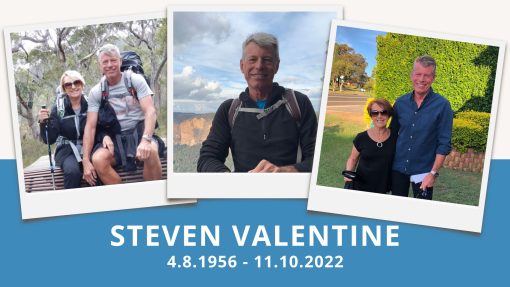
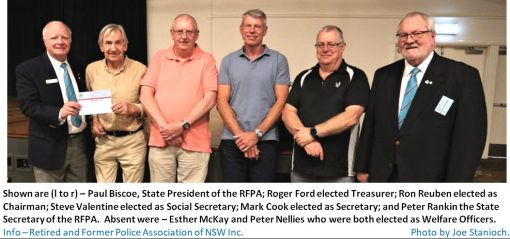
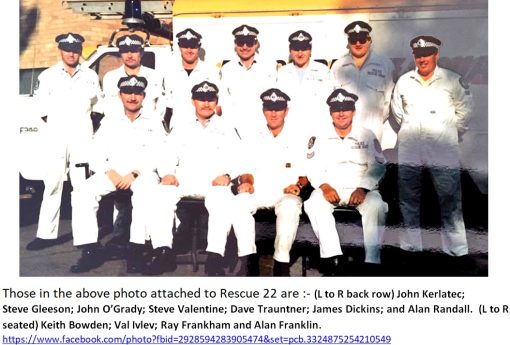
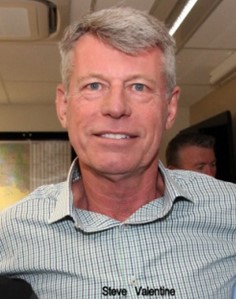
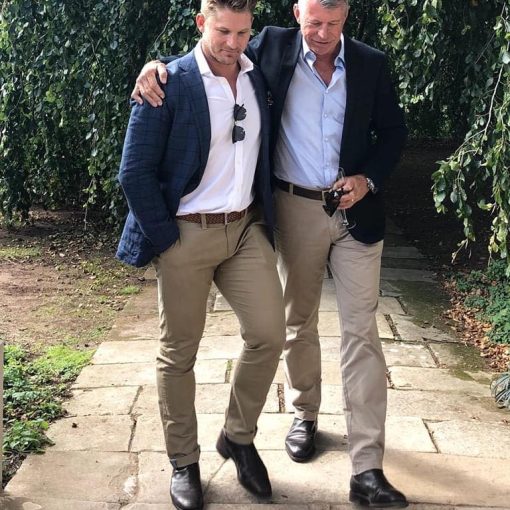
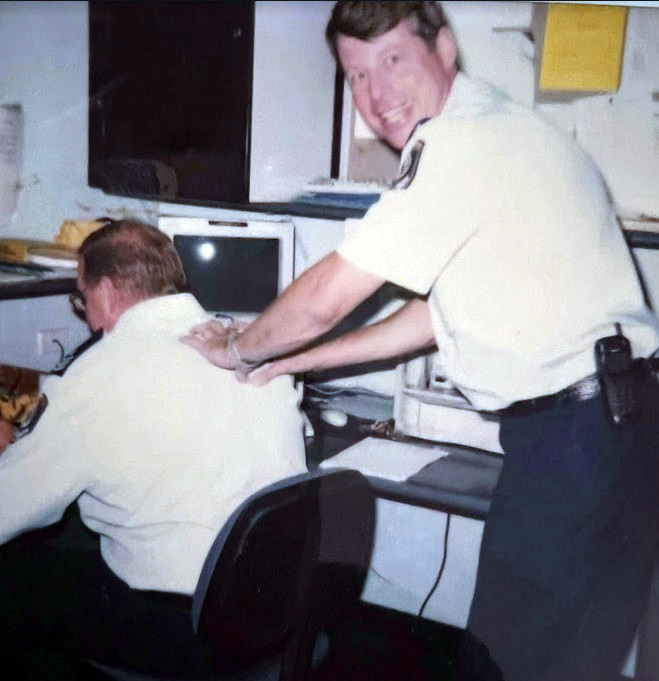
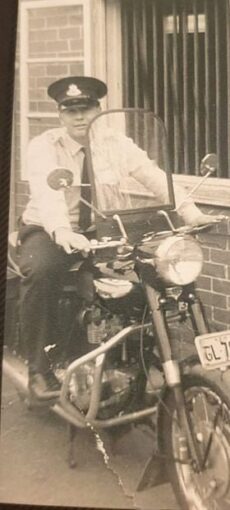
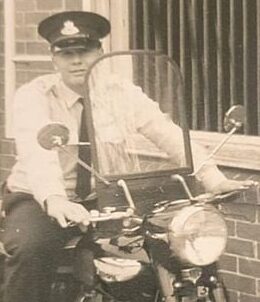
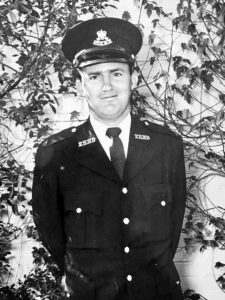
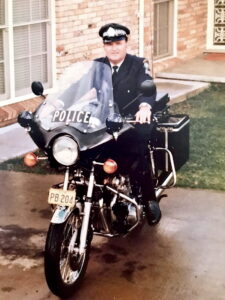
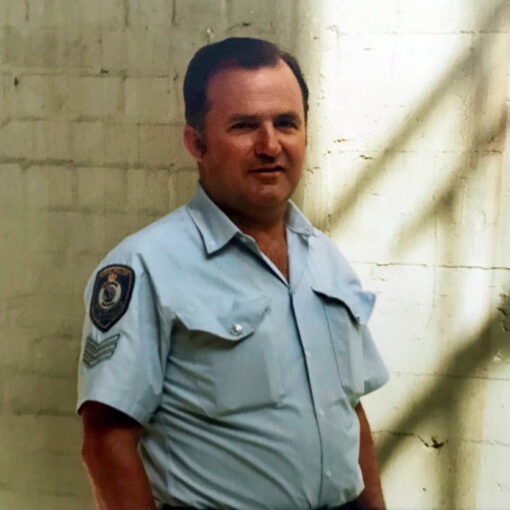
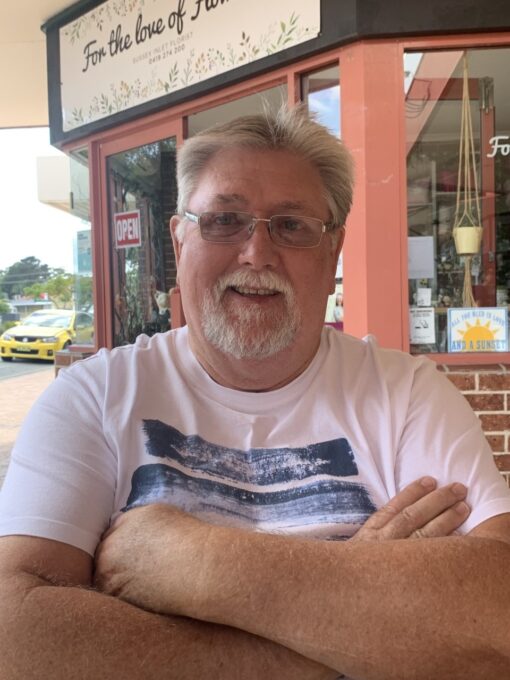
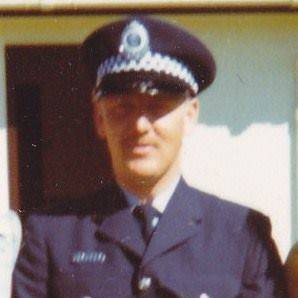
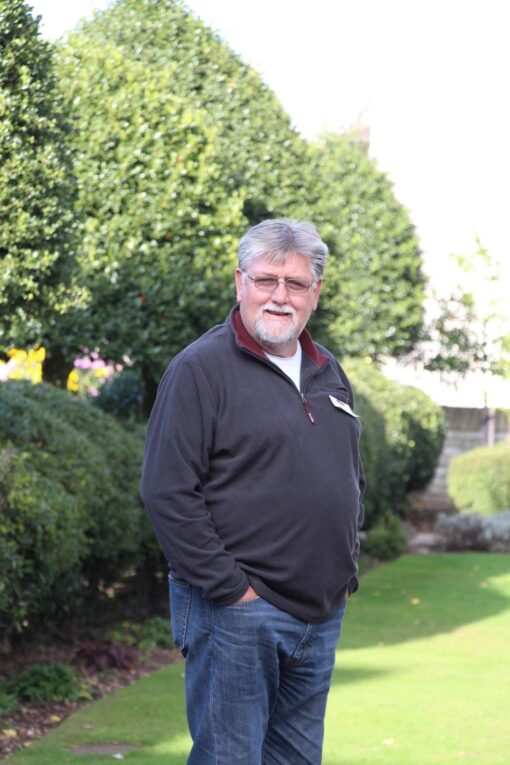
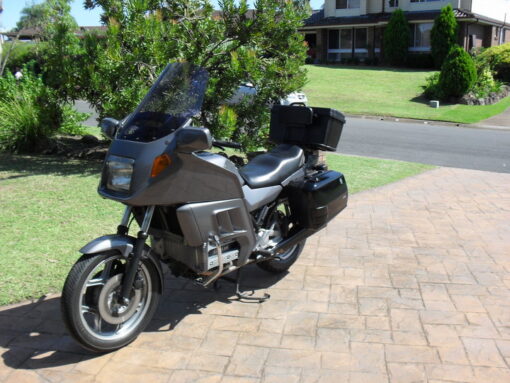
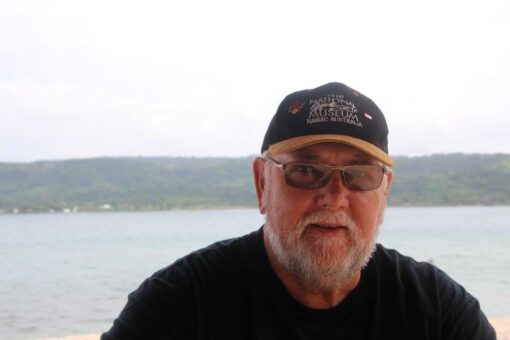
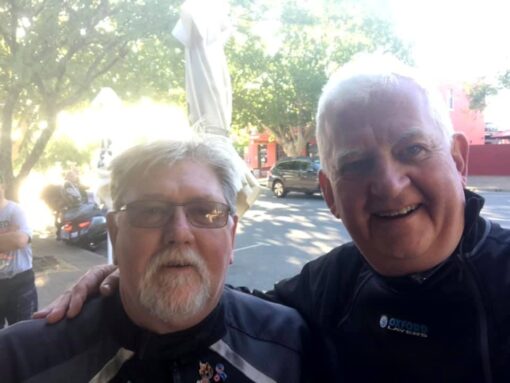
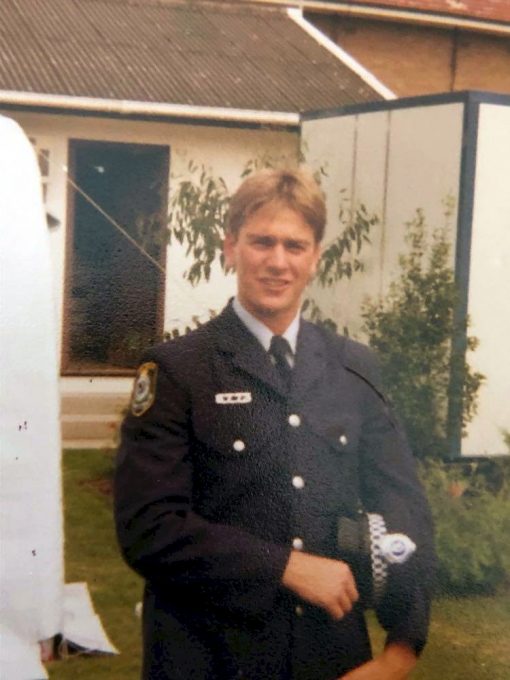
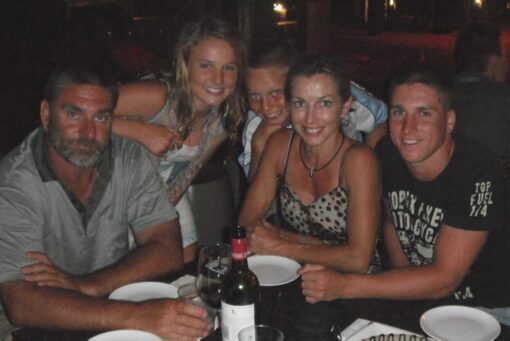
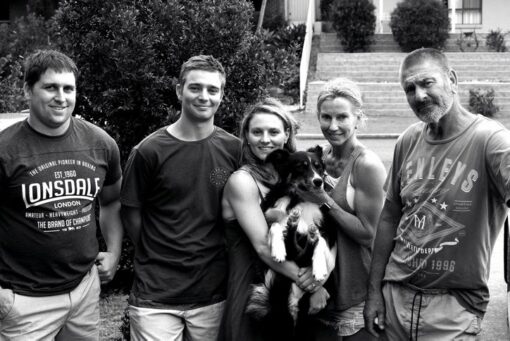
Relation in ‘the job’: Father to Shane VALENTINE, NSWPF # 43749
“possible” relation in ‘the job’: ?
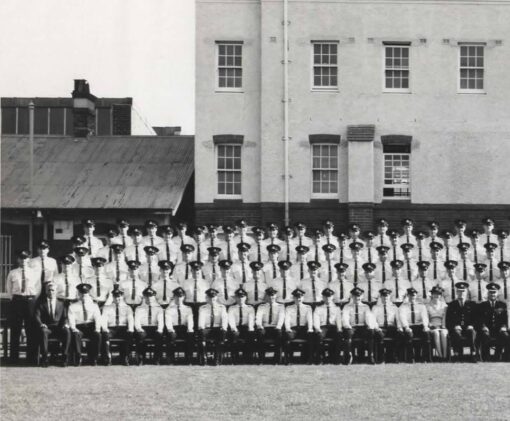
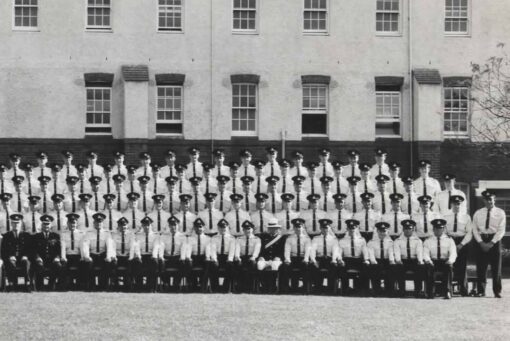
NSW Police Training Centre – Redfern – Class # 146 & 148A
NSW Police Cadet # 3085
New South Wales Police Force
Regd. # 17098
Uniform # 3085 ( recorded as his Cadet # also )
Rank: Commenced Training at Redfern Police Academy as a Police Cadet on Monday 8 July 1974 ( aged 17 years, 11 months, 4 days ) until ( according to his Service Card ) 16 June 1975
Junior Trainee – 17 June 1975 ( aged 18 years, 10 months, 13 days )
Probationary Constable – appointed Monday 25 August 1975 (aged 19 years, 0 months, 21 days ) ( 21 days overdue. May have failed an exam or had a physical issue )
Constable – appointed 25 August 1976
Constable 1st Class – appointed 25 August 1980
Detective – appointed ? ? ? ( NO )
Senior Constable – appointed 25 August 1984
Leading Senior Constable – appointed ? ? ?
Sergeant 3rd Class – appointed ? ? ?
Sergeant 2nd Class – appointed ? ? ?
Sergeant 1st Class – appointed ? ? ?
Final Rank: = Sergeant ?/Class
Stations: Cadet = Fingerprint Section ( 20 Division ), Merrylands ( 26 Division )( 10 Feb 1975 – ), ProCst = Liverpool GDs & Rescue Squad ( 25 Aug 1975 – Oct 1985 )( 22 Division )( ProCst – SenCon ), Liverpool & Green Valley ( Part Time Rescue Squad ( 9 March 1979 – )), Green Valley ( 22 Division ), Campbelltown ( 35 Division ) – Retirement
Service: From 8 July 1974to15 March 2012 = 37 years, 8 months, 7 days Service
Retirement / Leaving age: = 55 years, 7 months, 11 days
Time in Retirement from Police: = 10 years, 6 months, 26 days
Awards: National Medal – granted 17 March 1992 ( SenCon )
1st Clasp to National Medal – granted 10 August 2000 ( Sgt )
Born: Saturday 4 August 1956 in Manchester, England
Died on: Tuesday 11 October 2022 during the evening
Age: 66 years, 2 months, 7 days
Organ Donor: Y / N / ?
Cause: Cancer ( type = ? )
Event location: ?
Event date: Diagnosed a little over two months previous to his passing and commenced Chemo around the same time.
Wake location: Gledswood Homestead, 900 Camden Valley Way, Catherine Field, NSW
Wake date: Tuesday 18 October 2022 after the funeral service
( Due to current Govt. restrictions on ‘Gatherings’ due to Corona19 Virus Pandemic, some families may wish to have a Memorial Service / Wake with friends and family at a later date )
He was part of Secondary Training Class 148A and gained a mark of 355 = 88.75%
He attended lectures on the “Techniques of Aerial Observation” at the Police Rescue Squad ( most probably at Marrickville Rescue HQ ) ON 9th & 30th August 1978. Also attended the Police Disaster and Rescue Branch training course of 1978 / 1979.
He successfully completed the Constable 1st Class course, # 22, from 10 October 1983 – 4 November 1983 inclusive.
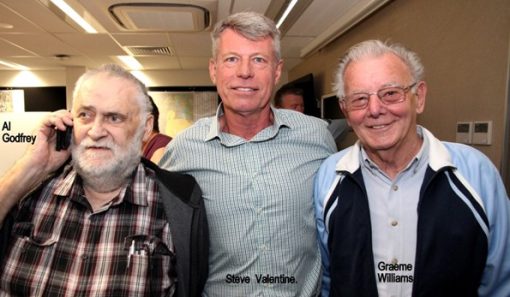
On the 16 August 2012, a “combined” ” Send Off ” was held for Steve VALENTINE, Paul HURNEY & Peter NORTON at Wests Leagues Club, Pembroke Rd, Leumeah.
Nothing further, than what is recorded above, is known about this person at the time of publication and further information and photos would be appreciated.
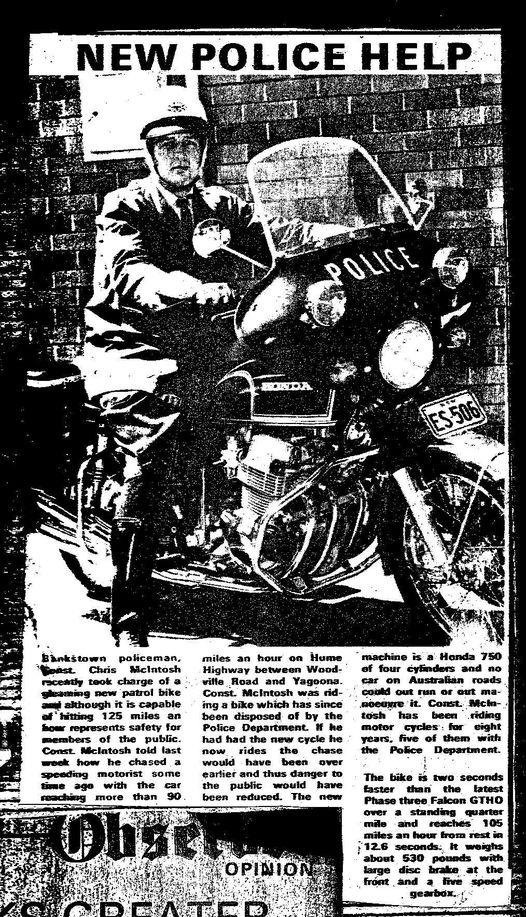
Bankstown policeman, Constable Chris McINTOSH recently took charge of a gleaming new patrol bike and although it is capable of hitting 125 miles an hour, represents safety for members of the public. Constable McINTOSH told last week how he chased a speeding motorist some time ago with the car reaching more than 90 miles an hour on Hume Highway between Woodville Rd and Yagoona. Constable McINTOSH was riding a bike which has since been disposed of by the Police Department. If he had had the new cycle he now rides, the chase would have been over earlier and thus danger to the public would have been reduced. The new machine is a Honda 750 of four cylinders and other car on Australian roads could out run or out manoeuvre it. Constable McINTOSH has been riding motor cycle for eight years, five of them with the Police Department. The bike is two seconds faster than the latest Phase three Falcon GTHO over a standing quarter mile and reaches 105 miles an hour from rest in 12.6 seconds. It weights about 530 pounds with large disc brake at the front and live speed gearbox.
Shortly after 9.30am on 22 September, 1973 Constable McIntosh was riding a Police Special Traffic Patrol solo motor cycle from Bankstown Police Station to Lakemba. As he was travelling along Wattle Street a panel van travelling in the opposite direction made a right turn in front of the police cycle. Constable McIntosh was unable to avoid a collision and the cycle struck the side of the van. The constable died as a result of injuries received in the collision.
The constable was born in 1946 and joined the New South Wales Police Force on 8 August, 1966. At the time of his death he was attached to the Traffic Branch.
Nothing further, than what is recorded above, is known about this person at the time of publication and further information and photos would be appreciated.
( Due to current Govt. restrictions on ‘Gatherings’ due to Corona19 Virus Pandemic, some families may wish to have a Memorial Service / Wake with friends and family at a later date )
Funeral Parlour: ?
Buried at: Rookwood Cemetery, Lidcombe, NSW
Plot: St Martha Section, ( cemented number unknown ) ?
Memorial / Plaque / Monument located at: ?
Dedication date of Memorial / Plaque / Monument: Nil – at this time ( August 2022 )
RAY is NOT mentioned on the Police Wall of Remembrance * NOT JOB RELATED
FURTHER INFORMATION IS NEEDED ABOUT THIS PERSON, THEIR LIFE, THEIR CAREER AND THEIR DEATH.
Nothing further, than what is recorded above, is known about this person at the time of publication and further information and photos would be appreciated.
( Due to current Govt. restrictions on ‘Gatherings’ due to Corona19 Virus Pandemic, some families may wish to have a Memorial Service / Wake with friends and family at a later date )
Funeral Parlour: ? TBA
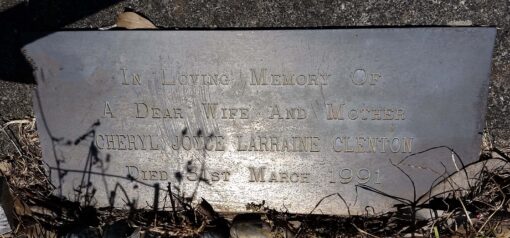
Buried at: Buried at Shellharbour Cemetery – with his wife, Cheryl who pre-deceased him on 31 March 1991
441-443 Shellharbour Road, Shellharbour, NSW
Lawn 10, Plot 9
( at the rear of the cemetery on the car park side )
Memorial / Plaque / Monument located at: ?
Dedication date of Memorial / Plaque / Monument: Nil – at this time ( March 2022 )
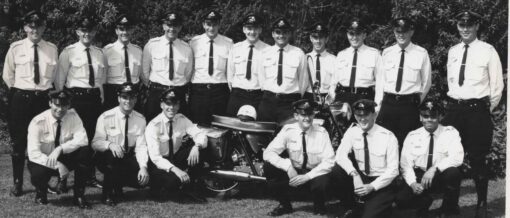
Class 110 – Redfern Police Academy – Police cyclist
Class 110 – NSWPF – Redfern Academy
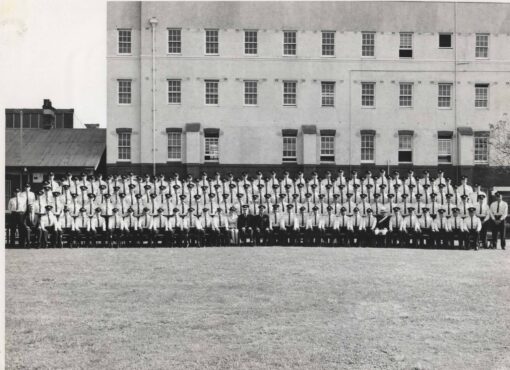
Class 110 – NSWPF – Redfern Academy
Class 110 – NSWPF – Redfern Academy
KEN is NOT mentioned on the Police Wall of Remembrance *NEED MORE INFO
FURTHER INFORMATION IS NEEDED ABOUT THIS PERSON, THEIR LIFE, THEIR CAREER AND THEIR DEATH.
Ken was the middle child of 13 – most of whom are still living ( 2022 ).
Nothing further, than what is recorded above, is known about this person at the time of publication and further information and photos would be appreciated.
**********
Cal
28 February 2022
James Godfry MOLLOY
| 17/10/2022
James Godfry MOLLOY
AKA Jim MOLLOY, Molly
Late of ?
Not related to Warren Sydney MOLLOY, NSWPF # 8319 Although they did work at Chatswood in the same era.
NSW Police Training Centre – Redfern ” Possibly ” Class # 079
New South Wales Police Force
Uniform # 2599
Regd. # 9349
Rank: Commenced Training at Redfern Police Academy on Monday ? ? ?
Probationary Constable- appointed 1 June 1959 ( aged 25 years, 11 months, 19 days )
Constable – appointed? ? ?
Constable 1st Class – appointed ? ? ?
Detective – appointed ? ? ? ( NO )
Senior Constable – appointed 1 June 1969
Leading Senior Constable – appointed? ? ? ( N/A )
Sergeant 3rd Class – appointed 1 September 1974
Sergeant 2nd Class – appointed ? ? ?
Sergeant 1st Class – appointed 30 September 1984
Final Rank= Sergeant 1st Class
Stations: ?, STP – North Sydney ( ? – 1978 ), ?, Divisional TRG, ?, Chatswood – Retirement
Service: From? ? 1959? to? ? 1988 = ? years Service
Retirement / Leaving age: = ?
Time in Retirement from Police: ?
Awards: National Medal – granted 15 September 1980 ( Sgt 3/c )
1st Clasp to National Medal – granted 22 September 1987 ( Sgt 1/c )
2nd Clasp to National Medal – granted 22 September 1987 ( Sgt 1/c )
Born: Tuesday 13 June 1933
Died on: Sunday 23 January 2022
Age: 88 years, 7 months, 10 days
Cause: Pneumonia
Event location: Northern Beaches hospital, NSW
Event date: ?
Funeral date: 1 February 2022 @ 11am
Funeral location: Sacred Heart Church, Park St, Mona Vale, NSW
( Due to current Govt. restrictions on ‘Gatherings’ due to Corona19 Virus Pandemic, some families may wish to have a Memorial Service / Wake with friends and family at a later date )
Funeral Parlour: ? TBA
Buried at: Burial at Mona Vale Cemetery,
Memorial / Plaque / Monument located at: ?
Dedication date of Memorial / Plaque / Monument: Nil – at this time (January 2022 )
JIM is NOT mentioned on the Police Wall of Remembrance *NEED MORE INFO
FURTHER INFORMATION IS NEEDED ABOUT THIS PERSON, THEIR LIFE, THEIR CAREER AND THEIR DEATH.
Nothing further, than what is recorded above, is known about this person at the time of publication and further information and photos would be appreciated.
**********
Unfortunately my computer system has become weak and can no longer stand the strain I place upon it.
In order to get my systems up and running again, I have invested $6k in a new computer system which is currently being built and I would expect that a lot of the notices I place on the system, will be devoid of a lot of information that I usually include; until my new system arrives and my databases and photos are transferred across.
This might not be completed until late February 2022.
Cal
24 January 2022
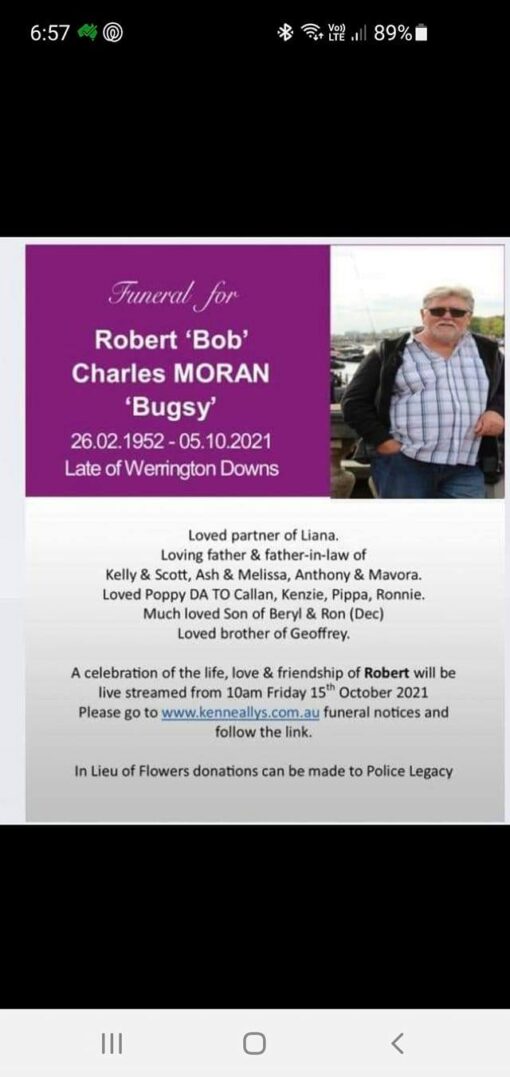
Robert Charles MORAN
| 17/10/2022
Robert Charles MORAN
AKA Bob MORAN, Bugsy MORAN
Late of Werrington Downs, NSW ( Formerly of St Georges Hall, NSW )
Uncle to Inspector Matthew HINTON, NSWPF # 39823
NSW Police Training Centre – Redfern – Class # 156
New South Wales Police Force
Regd. # 17689
Service: From 4 July 1977 to27 November 2008 = 31 years, 4 months, 23 days Service
Rank: Prior to joined the ranks of NSWPF – Bugsy was a Member NSW Railway Police before they came under the control of NSWPF
Commenced Training at Redfern Police Academy on Monday 4 July 1977 ( aged 25 years, 4 months, 8 days )
Probationary Constable- appointed 12 September 1977 ( aged 25 years, 6 months, 17 days )
Constable – appointed 12 September 1978
Constable 1st Class – appointed 12 September 1982
Detective – appointed ? ? ? ( NO )
Senior Constable – appointed 12 September 1986
Leading Senior Constable – appointed ? ? ? ( N/A )
Final Rank = Senior Constable – Retired
Stations: Darlinghurst ( ProCst )( 3 Division )( 1977 – 1978 ), Kings Cross, Metropolitan Traffic Branch – Bass Hill HWP ( 28 Oct. 1979 – 1987 ), Bowral HWP ( 16 Dec 1987 – 1992 ), Bowral HWP – Solo cyclist ( 1988 ), Bankstown GDs – then Exhibits Officer for Bankstown & Bass Hill Police Stns ( 16 Aug. 1992 – Retirement )
Retirement / Leaving age: = 56 years, 9 months, 1 day
Time in Retirement from Police: 12 years, 10 months, 8 days
Awards: NSW Police Medal – with 3rd Clasp – Awarded
( Due to current Govt. restrictions on ‘Gatherings’ due to Corona19 Virus Pandemic, some families may wish to have a Memorial Service / Wake with friends and family at a later date )
Nothing further, than what is recorded above, is known about this person at the time of publication and further information and photos would be appreciated.
( Due to current Govt. restrictions on ‘Gatherings’ due to Corona19 Virus Pandemic, some families may wish to have a Memorial Service / Wake with friends and family at a later date )
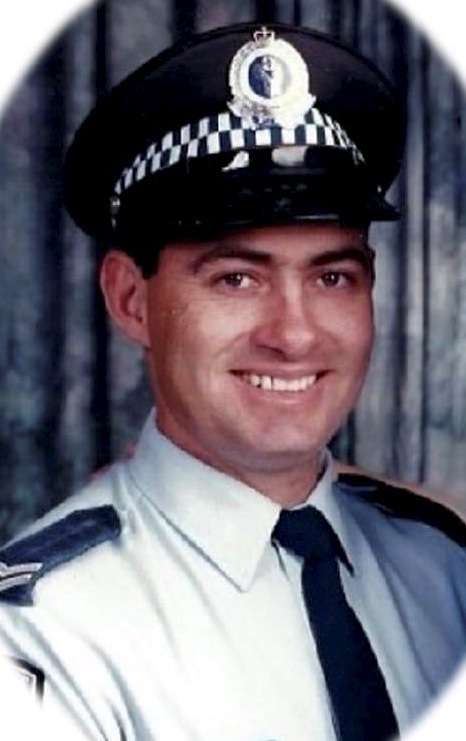
Condolences to Tanya and their sons – Conor, Tyler; families and friends.
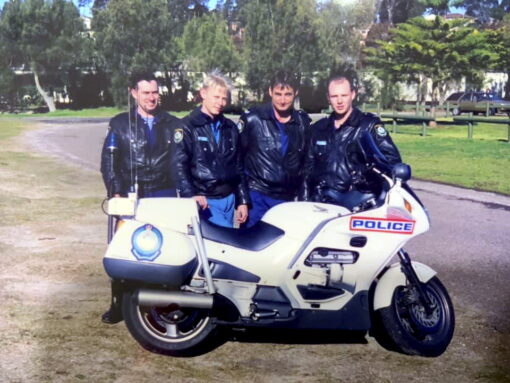
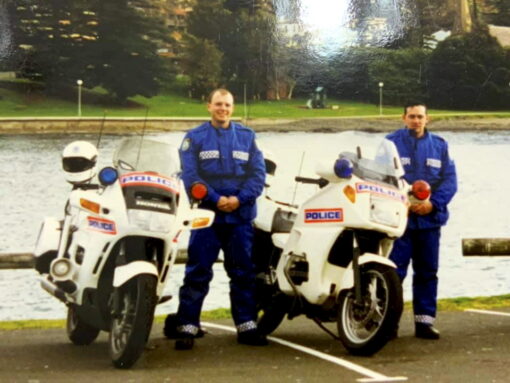
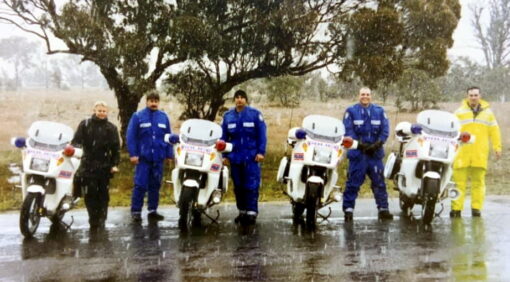
Tombo Barnez Scotty, so long ago mate, solo cycle course in the middle of winter 1998; rain, sleet, snow and just a little bit of sunshine; and, most of all, four weeks with a great bunch of blokes. All of us, a lot younger then, in what seems like a very different time; when a pair of king gee overalls, a standard issue leather jacket, some elastic sided baxter boots, a pair of leggings almost identical to those worn by the light horse in WW1, and whatever gear you could borrow from one of the certified cyclists back at work, were considered safe enough to wear as we scooted around the country side. Precious memories, even more precious now. Whatever the cause, I’m so sorry to hear you couldn’t stay around. Whenever our paths crossed, you always had a smile. May that continue to be the case wherever you find yourself now. RIP my friend.
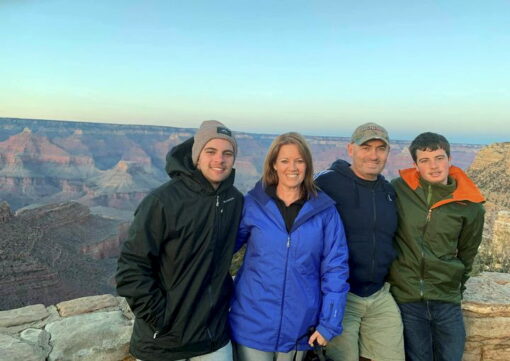
Conor, Tanya, Scott & Tyler at the Grand Canyon, USA in 2018
Goulburn Post
FERGUSON
Scott Elliott
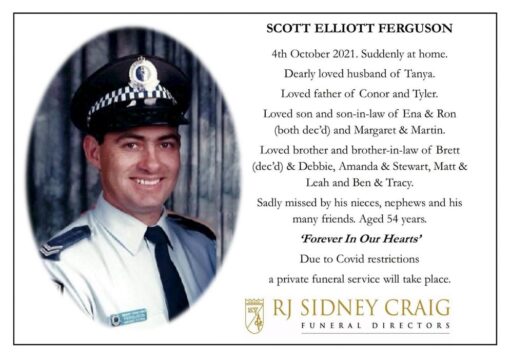
FERGUSON, Scott Elliot – 4th October 2021. Suddenly at home.
Dearly loved husband of Tanya.
Loved father of Conor and Tyler.
Loved son and son-in-law of Ena & Ron (both dec) and Margaret and Martin.
Loved brother and brother-in-law of Brett (dec) & Debbie, Amanda & Stewart, Matt & Leah and Ben & Tracy.
Sadly missed by his nieces, nephews and his many friends.
Aged 54 years.
‘Forever In Our Hearts’
Due to Covid-19 restrictions, a private funeral service will take place.
298 Sloane St., Goulburn (02) 4821 2122
An accredited member of the Australian Funeral Directors Association and F.D.A. of NSW.
Nothing further, than what is recorded above, is known about this person at the time of publication and further information and photos would be appreciated.
Cal
13 October 2021
John James DUNCAN
| 17/10/2022
John James DUNCAN
AKA Jack DUNCAN
Late of ?
NSW Police Training Centre – Redfern / Police Training College – Penrith / Belmore Barracks Class # ? ? ?
New South Wales Police Force
Uniform # 1252
Regd. # ‘Q‘ 2119
For the purposes of this website ‘Q‘ represents those Police joining between 1 March 1862 ( commencement of NSWPF ) – 23 February 1915 ( Commencement of NSWPF current numbering system )
Service: From? ?pre August 1925 ? to 10 May 1941 ( Resignation ) = 15+? years Service
Rank: Commenced Training at Redfern Police Depot on ? ? ?
Probationary Constable- appointed Wednesday 12 August 1925 ( aged 24 years, 2 months, 14 days ) ( Mounted Constable )
Constable – appointed 12 August 1926
Constable 1st Class – appointed 28 May 1937 ( loss of Seniority )
Detective – appointed ? ? ?
Senior Constable – appointed ? ? ? ( No such Rank during this period )
Leading Senior Constable – appointed ? ? ? ( No such Rank during this period )
Sergeant 3rd Class – appointed ? ? ? ( No such Rank during this period )
Final Rank = Constable 1st Class
Stations: Broken Hill Police District: ( White Cliffs )(28 March 1926 ), Wilcannia ( 17 August 1926 / 18 Nov. 1927 ), Broken Hill ( 26 March 1928 ), Menindie ( LockUpKeeper )( 27 July 1928 / 23 November 1928 / 10 May 1929 ), Torrawangee ( 29 July 1929 / 30 July 1929 / 30 Aug. 1929 ), Broken Hill ( 14 February 1932 ),
Riverina Police District: Wentworth (November 1933 ), Wentworth ( 1 January 1936 ), Yerong Creek ( O.I.C. )( 6 August 1936 / 4 Sept. 1936 ), Howlong ( O.I.C. )( 15 December 1936 ),
Western Police District: Ivanhoe ( O.I.C. )( 2 July 1938 ) – Resignation 10 May 1941
Retirement / Leaving age: = 39 years, 11 months, 11 days
Time in Retirement from Police: 52 years, 2 months, 17 days
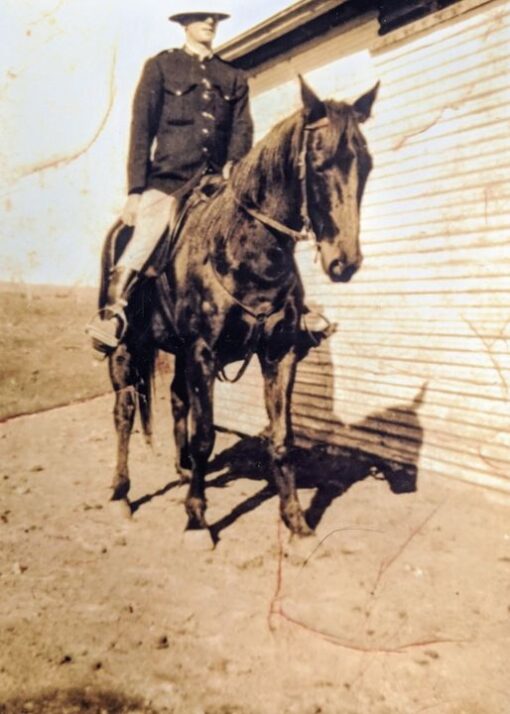
This is a photo of Linda & Ian Mitselburg’s grandfather, John James “Jack” Duncan. He was a mounted policeman in Wilcannia in the late 1920s. We are not sure of where the photo was taken, as he was also stationed in White Cliffs, Broken Hill, Menindee, Howlong, Wentworth and Ivanhoe during his time in the police. If you have an information that you can give us, it would be greatly appreciated.
Upon joining the NSWPF, Jack was described as:
5′ 8.5″ tall & 10 stone 8 lb whereas on the 26 June 1935 he was 5′ 9″ tall & 12 stone 1 lb.
Brown hair and eyes, Dark complexion. He was a native of Adaville near Moree, NSW, and was Single – although he married on the 17 April 1928 and he was previously employed as a Station Hand. He was Methodist.
He sat his Constable 1st Class Examination on the 5 October 1934. He had his First Aid Certificate and was Certified as ‘Competent’ in relation to driving motor vehicles.
Nothing further, than what is recorded above, is known about this person at the time of publication and further information and photos would be appreciated.
Cal
25 September 2021
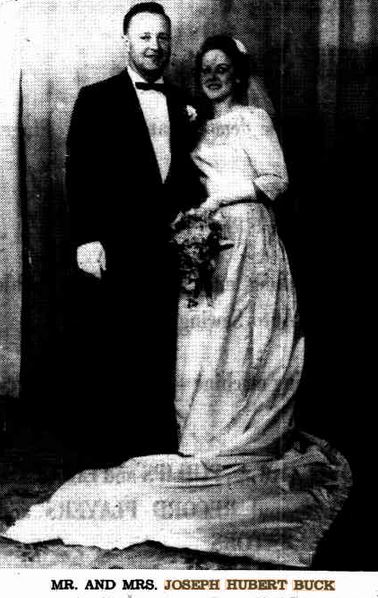
Joseph Hubert BUCK
| 17/10/2022
Joseph Hubert BUCK
AKA Joe BUCK
Late of ?
NSW Police Training Centre – Redfern / Police Training College – Penrith / Belmore Barracks Class # ? ? ?
New South Wales Police Force
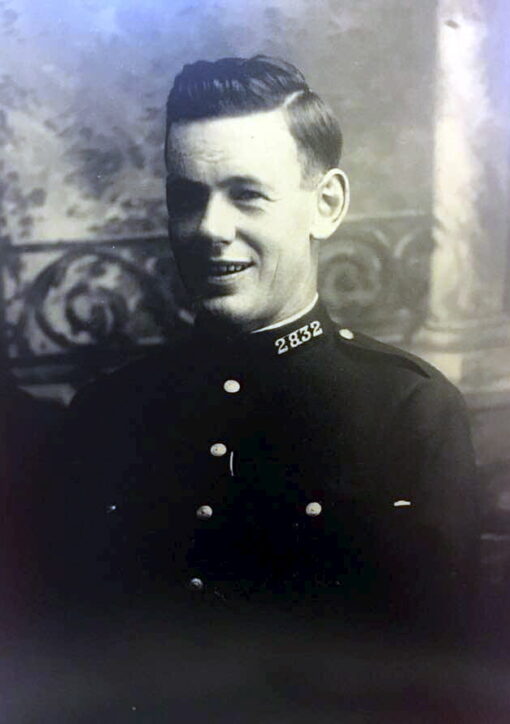
Uniform # 2832
Regd. # 30?? or 33??
Service: From? c March 1929 ? to? ? post 1964? = 35? years Service
Rank: Commenced Training at ? Police Academy on ? ? ?
Probationary Constable- appointed ? ? ? ( March 1929 ) aged 21 years
Constable – appointed ? ? ? ( 1929 )?
Constable 1st Class – appointed ? ? ?
Detective – appointed ? ? ? ( NO )
Senior Constable – appointed ? ? ?
Leading Senior Constable – appointed ? ? ? ( N/A )
Sergeant 3rd Class – appointed 8 January 1943 ( aged 36 )
Sergeant 2nd Class – appointed 21 December 1948
Sergeant 1st Class ( Passed his exam in August 1950 ) – appointed ? ? ?
?, Bathurst ( Insp. 3/C )(29 March 1956 ), Bathurst ( Acting Superintendent – transferred from 25 February 1959 ),
Cancellation of the assignment of Supt. 2nd Class Joseph Herbert BUCK to the charge of the Northern Police Administrative District, with headquarters at Tamworth – from the date of relinquishing that charge ( Sept. 1961 ),
Country Superintendent ( 1960s ), Goulburn ( Supt ), Bourke St – Darlinghurst ( Superintendent )( 12 June 1964 ), Police Headquarters – Hunter St, Sydney ( Assistant Commissioner – 21 December 1964 )
Retirement / Leaving age: = ?
Time in Retirement from Police: ?
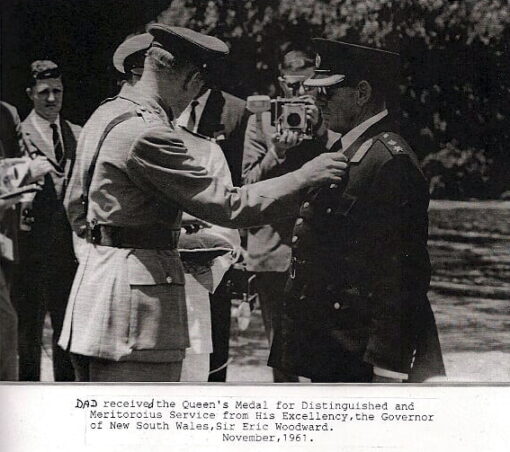
Awards: Queens’ Police Medal for Gallantry ( Imperial ) – granted 10 June 1961 ( Supt. 2/C ) Awarded Nov 1961
Life Membership Certificate – Temora Rugby League Football Club – Awarded 17 March 1949
Joseph Hubert Buck was born in Forest Gate, London in 1907.
As a 15 year old, he immigrated alone to Australia in 1923.
In London, Joe’s family business was a bakery. According to his Father, Joe could not bake, as he tended to burn the cakes.
After one such burning, Joe describes his fathers response… “Dad gave me such a hiding that I threatened to go to Australia, and Dad was so angry he paid my passage”.
Joe’s journey to Australia brought him to the area we now know as the Central Darling Shire Council area including White Cliffs, Wilcannia, Ivanhoe and into Tibooburra and down the Kidman Way.
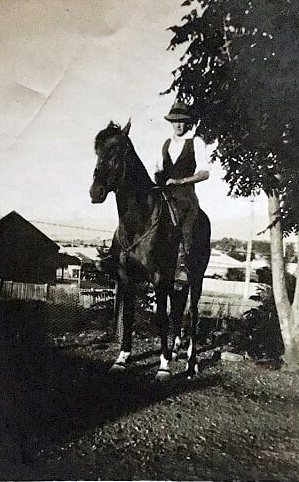
In those early years, Joe became an accomplished Bushman, he learnt many Rural Skills in the Sheep Industry. Of course, like all good Bushies, he knew how to ride a Horse.
It would appear that Joe became a popular Identity in the Far West.
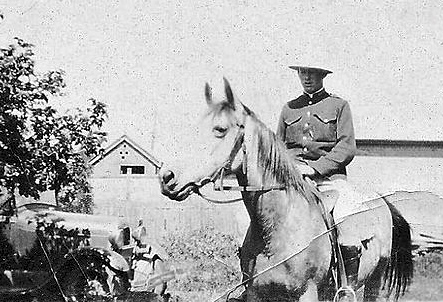
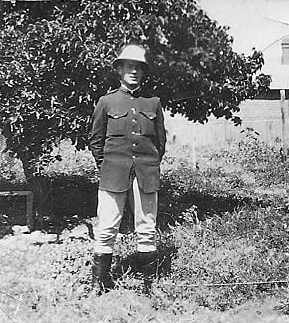
Then, at the age of 21, Joe Buck joined the NSW Police Force as a Mounted Police Officer in 1929.
He ended up in Broken Hill to commence his career it would appear.
Because of Joe’s previous experiences out in the Never Never of the Far West, Joe was utilised by the Police to conduct Rural Patrols.
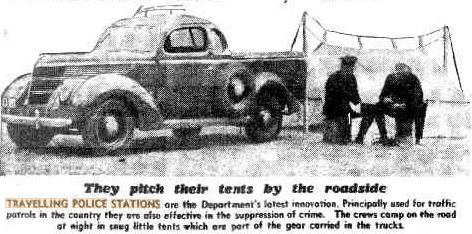
This duty was then re-imagined into a Travelling Police Station where Constable Joe Buck become Officer in charge of that vehicle.
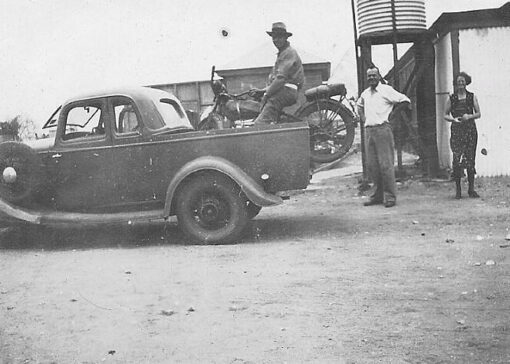
The chosen vehicle was a Ford Utility Lorry and his Attachment was at White Cliffs and Wilcannia.
The vehicle was fitted with all the Administrative Books and Papers a Police Officer requires.
Remember back in those days, Property Owners and workers had to travel to Wilcannia and Broken Hill Police Stations, just to name a few, to update licenses.
So this new Travelling Police Station, with Constable Joe Buck behind the wheel, was responsible for the following (and more):
Conducting Marriage and Burial Services.
Gun and Dog Licence Renewals.
Clerk of Petty Sessions Duties. (Registering Births, Deaths and Marriages).
Constable Buck also attended the sick and injured.
Assisted the Midwifes.
Lent a hand in Shearing Sheds and Lambing Yards.
Entertained Farm Hands and Owners with Song and Music.
Constable Buck was rated one of the best bushman, trackers and horseman in the Far West.
His advice was sought on cattle and sheep by men reared on the land.
He knew the country better than those born there.
Constable Buck was also well known across the Tri-State boundaries.
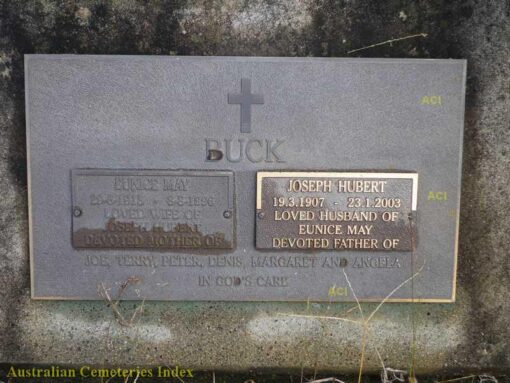
Joe’s son Peter Buck, is now 80 years old himself. He has supplied Back to Barrier with more information about his Father. We are going to be in constant contact with Peter to have photos he has supplied digitised.
We will be reporting back on more of this great Police Officers career out in the Far West and on-wards.
Joe did retire with the rank of Assistant Commissioner and we want to delve into that part of his Career as well. But for this Post, we are going to take a look at his Travelling Police Station.
If you have any information on Joe’s Career, especially photos, we would love to see them.
We have been speaking to Peter Buck and he informs us that when Joe Buck became a Police Officer, he was first Stationed at Junee, then transferred to Ivanhoe and onwards to Broken Hill.
I posted on another site about the yarn I heard about him after he dropped into Hurstville one day.
The story goes when he was at Ivanhoe visiting stations on horseback he got Lost.
So he caught a sheep, checked it’s earmark and compared to the Police issue leather ears, understood what station ( property ) he was on and continued on.
Anyone that doesn’t know leather ears, they were all the sheep earmarks in your area punched into a piece of leather shaped like a sheep’s ear and string on a piece of wire.
Vincent Andrew Dunn appeared before Mr. Parker, P.M., at the Leeton Court of Petty Sessions on Tuesday on a charge of using indecent language in a public place, and further, with having offered a bribe to Constable Walsh in an endeavor to induce him to depart from the course of duty.
On the first charge he was fined £3, in default 21 days hard labor, and for the attempted bribery, £5, or one month. Time was allowed to pay.
Giving evidence in the first charge Constable Walsh said that Dunn was speaking in a loud voice, his words being audible to a number of people amongst who were women. He told him several times to go away, before he eventually arrested him.
Dunn pleaded guilty to the language charge, the words complained of being shown him on a piece of paper — though he was not sure they were the exact words he used. The language arose out of a conversation with his step brother as a result of a motor collision.
Giving evidence on the bribery charge, Constable Walsh said he had Dunn under arrest for indecent language, and when near the old school grounds, defendant stopped and said to him ” you want to remember that I have a wife and family. Here is a pound note, let me go!” He then handed him the pound note ( produced ). Witness said to Dunn, ” no, I won’t let you go- This is bribery, and I am going to charge you.” He took Dunn to the Police Station and charged him. Defendant said in reply to the charge. ” I know nothing about it.” Witness communicated with Sergeant Thomson, who came over a little later. Dunn said to the Sergeant, ” what am I charged with?” The latter said ” Constable Walsh has already charged you.” Dunn said ” I am pleading guilty to nothing.” Sergeant Thomson said ” nobody is asking you to plead.’ Dunn said ” does the constable know the number of the pound note?’ Sergeant Thomson said ” this is the note the constable handed me, and I am going to give you the number of it.’ Dunn said to the sergeant as he was going out the door: ” You have me again. You have put it over this time, sergeant!”
To Mr. Atkins, who defended the accused witness said they were joined by Constable Buck on the way to the police station, but Dunn did not draw the latter’s attention to a pound note which he ( Constable Walsh ) had in his hand. Dunn did not speak to Constable Buck at all.
” Did it not strike you,” asked Mr. Atkins, ” that you needed some corroboration for your story?”
Witness. ” There was no-one else present when it took place.”
Mr. Atkins: You are quite confident in giving your evidence, and the defendant has no chance against you ?
Witness: I am giving my evidence in a truthful manner.
” Did it not strike you ” persisted Mr. Atkins, ” that as a conscientious
police officer, you should have obtained some corroboration?”
Witness: ” I don’t know.”
Mr. Atkins: Didn’t you have your opportunity in the presence of the sergeant to obtain a statement from Dunn?
Witness: He refused to make any statement.
In reply to Sergeant Thomson witness said he remembered Dunn saying after he was charged: ” does the constable know the number of the note?”
Sergeant Thomson gave evidence that when he went across to the station and saw Dunn he wanted to know with what he was charged, and he said ” Constable Walsh has already charged you. He said ” I want you to tell me.” He denied owning the note which Constable Walsh had, and which he was charged with offering as a bribe. He gave a copy of the number to defendant and another to Constable Walsh.
Mr. Atkins objected to this number being tendered as evidence.
The Magistrate said it was not very material, but he would uphold Mr. Atkins’ objection as it was not the proper way of taking a number.
Sergeant Thompson continuing his evidence said that Dunn remarked to him: ” You have got me again, sergeant. ” You are putting this over me.”
Mr. Atkins: Do you remember having a conversation with Dunn opposite my office in Wade Avenue?
Sergeant Thomson: Yes.
Mr. Atkins: Am I correct in saying that you intimated that you were going to get him one of these days?
Witness: No such thing.
Mr. Atkins: Didn’t you say to him, I missed you last time, but I’ll get you next time.
Witness: No such thing.
Mr: Atkins:, You knew when you were consulted by Constable Walsh that Dunn was denying the pound note?
Witness : I didn’t know anything of the kind.
Mr. Atkins: You did not attempt to get any corroboration of Constable Walsh‘s evidence here to-day?
Witness: When the man was charged it would not be fair to him to start a cross examination.
He denied that he did that in other cases. In further reply to Mr. Atkins, witness said that it did not strike him that he should get corroboration of Constable Walsh‘s bribery charge, because he believed the constable who was one of the most reliable officers he had ever came in contact with.
Witness added that he believed in fair play, and did not want to interfere with a man after he had been charged.
Dunn, who pleaded not guilty, entered the witness box and denied the statements of Constable Walsh, and said that he never gave the pound note which had been tendered as evidence — or any pound note.
Constable Walsh arrested him in the main street of Leeton, and when they got to the M.I.D. corner the former said to him, ” Who owns that lorry?” meaning one concerned in a slight collision.
He ( Dunn ) said ” I own it,’ and Constable Walsh said ” a mongrel b_____d like you couldn’t own it.” The constable also said ” you are a b_____d, Dunn, bred and born. You are a disgrace to the parents who reared you.”
Witness replied: ” I have to take it.”
When they came to the corner of the Court House, added Dunn, Constable Walsh had something in his hand — a note.
Just then a mounted policeman came up, and he drew the attention to the money in the constables hand.
He said ” I see nothing. ” In reply to Mr. Atkins Dunn, said he realised that he was on oath, but could swear positively that he never gave the Constable a pound.
When he called on the mounted constable to assist him and he refused, he never said any more.
To Sergeant Thomson, Dunn said that as far as he knew he had not spoken to Constable Walsh before in his life, and never heard him use language like that complained of.
Sergeant Thomson asked Dunn to explain why it was that every time he gave evidence against a constable he always alleged that they made use of filthy language.
Dunn said that he did not remember that he ever did.
” Let me refresh your memory, ” said Sergeant Thomson. ” You said that Constable Walsh used filthy language.”
Sergeant Thomson: ” You are not very friendly disposed towards the police are you?”
Defendant: ” I don’t think I’m too friendly with you.”
Sergeant Thomson: Never mind about me. I am no bad friend of yours. But the police in general, you have no time for them, have you?
Defendant: They are all the same to me. I have no ill feelings towards the police. I said you were against me.”
Sergeant Thomson : That is your superstition. Why did you say, he added, ” that I was trying to put it over you?”
Defendant: You told me before that you would get me.
Sergeant: Where?
Defendant: In front of Mr. Atkins’ office.
Sergeant: There was a man on the road, standing with you, why didn’t you get him as a witness?
Defendant did not reply.
Sergeant Thomson: How could I put it over you on the bribery charge when I was not there? When I came to let you out, you accused me of putting it over you. Did you make any complaint about Constable Walsh using filthy language? asked Sergeant Thomson.
Defendant: I was not game.
Sergeant: Do you want His Worship to believe that?
I do. It is true.
Defendant further admitted that he got the number of the note, but said nothing about it.
Joseph Hubert Buck ( a mounted constable stationed at Leeton ) denied that Dunn had called on him to witness that Constable Walsh had a pound note in his hand.
To Mr. Atkins, he said he never heard him saying anything.
Mr. Atkins asked for an acquittal on the grounds that there had been insufficient corroboration of bribery.
The Magistrate, however, in convicting, said that he accepted the evidence of the police.
It would not be possible to get corroboration, as these things did not happen when there were other people about.
He expressed the opinion that Dunn had gone out of his way to cast aspersions on an honorable body of men.
He had charged the police with using language unworthy of the force. He did not believe Dunn’s evidence.
A SENSATIONAL story was unfolded at the Tumut Police court on Monday last, when two brothers were the main figures in an extraordinary case.
Edward John McInerney, 54 years, a retired farmer, of Tumut Plains was charged before Messrs. R. L. Blakeney and Thomas Wilkinson, J’s. P., that he at Tumut Plains, near Tumut, on the 13th June, 1932, did attempt to discharge a loaded gun at Frederick Denis McInerney, with intent to murder the said Frederick McInerney.
Sergeant ( 1st class ) Peter Stewart prosecuted.
Mr. McKenzie appeared for the defence.
After hearing evidence accused was committed for trial at the Gundagai Quarter Sessions on the 21st instant.
The evidence told of a brother’s quarrel, and such statements as,
“He aimed the gun at my head, and I heard the trigger click,” were made by one party.
Allan Royal Taylor, police constable, residing at Tumut, deposed : At 10a.m., 13th inst I was on duty in Wynyard-street, Tumut, and from something heard, in company with Constable Buck and Frederick McInerney, I proceeded to the residence of Jack McInerney, at Tumut Plains; this was the residence of the accused.
I followed Constable Buck into kitchen at the rear of the house where I saw Mrs. McInerney and the accused sitting there.
I heard Constable Buck say to accused I believe there has been a row out here this morning, what happened?
The accused said “Fred was trying to drive the cattle past the house, and I went out to stop him.
” I TOOK THE GUN TO FRIGHTEN “HIM.”
I heard Constable Buck say, “Was the gun loaded. He replied, “No.”
I then said to accused, ” Was there anybody else there?” He said, “Reg was about,” meaning Reg Barham. I said, “Where is he now?” His brother Frederick said, “He is down the paddock.” Fred McInerney was present the whole time. I said, “Can you get him?” He said, “He is coming.”
When he arrived, I said to him ( this was Reg Barham ), “Did you see what happened?” He said, “Yes.” I said, “Where were you?” He said, “I was a little way down the paddock.” I said, “What did happen?” He said, ”Fred was trying to drive the cattle past and Jack tried to stop him.’ He said he took a gun. I said, “Did you see him with the gun?” He said, “I saw him point it at him.” I said; “Did you hear it click?” He said, “No.” I said, “Was the gun loaded?” He said; “Yes.” I said, “What became of the cartridges?”
I produce the cartridges. ( Ex. A ).
I examined the cartridges and saw where one cap had been struck. The cartridges were fully loaded.
Constable Buck handed me a gun, which I now produce. ( Ex. B ).
I have had considerable experience with guns. I examined the nipple on the left hand side, and found that it had been recently struck by the hammer. The gun was in two pieces when I examined it. By means of the hammer striking the nipple it automatically discharges the cartridges. The accused was present during the whole of the conversation.
I can tell by the mark on the nipple that it had been recently struck by the hammer. The hammer strikes the nipple on the left hand side. This would have a tendency not to discharge the cartridge.
To Mr. McKenzie: When I handled the gun there was a lot of dirt on it. The hammers have got dirt and grass on them. The gun was in two pieces when I first saw it.
Joseph Hubert Buck, police constable, residing at Tumut, deposed: About 10 a.m. this day ( Monday ), I was interviewed by Mr. Fred McInerney, who told me something. Acting under instructions from Sergt. Stewart, and in company with Constable Taylor and Fred MçInerney I went to Tumut Plains and there saw the defendant. I said to him, “I believe there has been some trouble out here this morning.” Defendant replied, “Yes.” I said, “What happened?” Defendant said, “Fred was driving his cows past my house this morning and I went out to stop him.” I said, “What did you do?” He replied, “Fred picked up a stick and
” I WENT INTO THE HOUSE AND “GOT THE SHOT GUN.”
I said, “What did you get it for.” He said, “I wanted to frighten him.” I said, “Was it loaded?” He replied, “No.”
Another man then came up. I said, “What is your name?” He replied, “Reg Barham.” I said, Do you work for Mr. Fred McInerney?” He replied, “Yes.” I said Did you see anything take place out here this morning?” He replied, Yes.” I said, “What happened?” He said, “I saw Fred McInerney driving his cows past Jack’s house.
“JACK CAME OUT AND POINTED “A SHOT GUN AT FRED.”
He said Fred then dived at Jack’s legs, and they were struggling on the ground when he reached them. I took the shot gun from out of Jack’s hands and opened it and found two cartridges. I said to accused, “This is a very serious matter, if the shot gun had gone off your
“BROTHER MIGHT HAVE “BEEN KILLED.”
I said, “What do you keep the shot gun for?” He replied, “Because if I had to go and get cartridges whilst the crows were outside, they would be gone by the time I had it loaded.’ I said, “In that case you must have known that the shot gun was loaded when you pointed it at your brother.” Accused replied, “If I had wanted to shoot my brother, I could have done so whilst he was coming up on me.’
I said, “According to your brothers statement, and the fact that the hammer had hit the cartridge in the shot gun, you did pull the trigger.” Defendant made no reply. I then said to Fred McInerney, “What do you want us to do in this matter?” He replied,
“I WISH TO GIVE HIM IN CHARGE.”
I cautioned defendant, and he made no reply.
He was then taken to the Tumut police station, where he was handed over to Sergt. Stewart.
To Mr. McKenzie: The gun was in two pieces when I saw it; the left hand nipple had been struck by the hammer. The nipple was out of the breach. I noticed quite a lot of dirt on the hammers. I also noticed that it was a pretty old gun.
To the Police: The nipple on the left hand barrel was out. If the nipple was struck by the hammer it would cause it to remain down.
To the Bench: I found the gun behind the door in the kitchen. It was standing in a dark corner.
To the Police: I examined the two cartridges ( produced Ex. A ). I found that the nipple of the gun had struck one cap, the cartridge had not exploded.
Frederick Denis McInerney, farmer, of Tumut Plains, deposed: The accused is my brother. He resides with my mother, about 150 yards from where I reside. About 9.30 a.m. this day ( Monday ), I was driving my milking cows past accused’s house. When about 20 yards from his house; accused came out with something in his hand. I told him to
CLEAR IN OUT OF THE ROAD
and let me get my cows past. He then ran into my mother’s house, where he resides, and came out with an old double barrel shot gun. I ran up to him. I did not think is was loaded. I caught him by the legs. When I got about five yards from him
HE AIMED THE GUN AT MY HEAD AND I HEARD THE TRIGGER CLICK
I then rushed and caught him by the legs, threw him on the ground, and I was holding him with one hand and trying to get the gun with the other hand. While I was struggling I opened the gun and saw a cartridge in the barrel closest to me. Reg Barham, a man working for me, ran up and took the gun from the two of us.
Accused called out to Barham, Bring that gun back.” My brother had previously objected to me driving the cows past the place. He has no authority to do so. The property where the cows go, is owned by me. I have not given my brother any occasion to assault me, and only disputes have been over financial business. not of great importance.
After he got up, he went inside and came out with something else in his hand. I was present when Constables Taylor and Buck visited the accused this morning ( Monday ). I was not present during the whole time they were there. I didn’t know where the gun was. The gun used, is the gun now produced. It has been in the home 40 or 50 years.
To the Bench; It is over a month ago since I had words with my brother, it was over money matters. I generally eat out a paddock with the cattle. It is over a month ago since accused objected to me taking the cattle past the house. When struggling with my brother. I opened the gun. I distinctly heard the gun click. Reg Barham broke the gun when he took it from us. I am not of a quarrelsome nature.
To Mr. McKenzie: I had a stick in my hand which I was driving the cows with. I am quite sure my brother hurried into the house — he ran in. He went quicker than a walk. When I was about 30 yards away I told him to clear out. When he came out with the gun I ran up towards him. I did not stop to say anything to him.
To the Police: When I told accused to clear out he was endeavouring to block the cows from passing.
To the Bench: I picked up the stick before I saw accused.
Reginald James Barham, dairy hand in the employ of Frederick Denis McInerney, residing at Tumut Plains, deposed: I was employed by Frederick Denis McInerney. This morning ( Monday ), I saw my employer driving cows away from the milking yards. He was taking them across the road towards a paddock he owns. I know the accused. He ( my employer ) had to pass accused’s home. Accused came out and tried to stop the cows. He was singing out to a dog. He was right in the front of the cows. I am not sure whether he had a stick. The cows ran back towards the milking yards. I saw Frederick McInerney run over towards accused. The accused ran into the house. Frederick McInerney sang out to me to bring the cows back again. He came down to help me drive the cows past the house. By that time the accused had come out of the house again,
CARRYING A DOUBLE SHOT GUN
in his arms. We were fairly close about 30 yards from accused. Jack pointed the gun at Fred. He pointed gun towards him, I am not sure if it was pointed at him. Fred ran through the water hole. Just as he got to accused he ducked. He was carrying a stick. He caught accused round the back of the knees and
THREW HIM.
I saw them fall. They were lying on the ground not struggling. I went up to them and got hold of the gun, and took it away from them. Fred McInerney said, “Take it home, Reg. Accused said, “Don’t take it home.” I opened the breech. The gun
WAS LOADED IN BOTH BARRELS.
I extracted the cartridges from the gun. I have examined the two cartridges. The gun produced is the gun they had. I broke the gun and threw it away. Accused came down and picked up the gun and took it into the house. I saw him. When accused and my employer got on their feet, my employer and myself went down to the cows. We made a second attempt to drive the cattle past and accused again came out of the house
HE HAD AN AXE IN HIS HAND.
We let the cows go and I went on with my work.
To the Bench: I am quite sure the gun was closed when I picked it up. I had the two cartridges in my possession until the police came out. I did not look at them. I just pulled them straight out of the gun and put them in my pocket. I did not start the cows from the yards. Fred McInerney had a stick when he started the cows the first time, but dropped it when he ran. I have never heard any disagreement between the brothers.
To Mr. MacKenzie: The water hole is practically mud, it is shallow. Fred McInerney had a stick in his hand at the time. To the Police: Accused was about ten yards from Fred McInerney when he pointed the gun at him. I saw him raise the gun and point it.
To the Bench: When accused and Fred McInerney were on the ground I did not hear anything. They were not struggling.
Accused was committed to stand his trail at the Gundagai Quarter Sessions on June 21st, 1932.
Constable Joe Buck, from Ivanhoe, and now holidaying at Tumut, was admitted to the Tumut and District Hospital on Wednesday night, having developed a temperature and sore throat.
Constable Joseph Hubert Buck to act as Assistant Registrar of Births, Deaths and Marriages for the District of Wilcannia, at Tibooburra, during the absence of Constable A. McAvoy, on leave,— from 30th April,
Government Gazette of the State of New South Wales (Sydney, NSW : 1901 – 2001),
Friday 13 September 1935 (No.162), page 3640
(5882) Police Department,
Commissioner’s Office,
Sydney, 7th September, 1935.
INSPECTOR OF SLAUGHTER-HOUSES.
BY virtue of an authority vested in me by an Order of His Excellency the Governor-in-Council, I have appointed the undermentioned member of the Police Force as Inspector of Slaughter-houses, and of cattle intended to be slaughtered:—
Constable Joseph Hubert Buck; Station— White Cliffs; Police District for which appointed— Mitchell.
N.B.— It is to be understood that the appointment of members of the Police Force as Inspectors of Slaughter houses will cease on their leaving the Service.
Government Gazette of the State of New South Wales (Sydney, NSW : 1901 – 2001),
Friday 18 October 1935 (No.179), page 4141
(6700) Department of Labour and Industry,
Sydney, 18th October, 1935.
RURAL WORKERS1 ACCOMMODATION ACT.
HIS Excellency the Governor, with the advice of the Executive Council, has been pleased to appoint the undermentioned members of the Police Force to be Inspectors to carry out the provisions of the Rural Workers’ Accommodation Act in the districts specified in connection with their respective names.
H. M. HAWKINS.
Constable 1st Class James Collins; Station.— Michelago; Police District— Queanbeyan.
Constable Joseph Hubert Buck; Station— White Cliffs; Police District— Mitchell.
Constable Ralph Moore Cravigan; Station— Bendemeer; Police District— Armidale.
Constable Matthew Colin Sullivan; Station— Marrar; Police District— Wagga.
A picturesque phase of police patrol will be introduced to the Broken Hill district if the suggestion of Superintendent Collings, who is staying at the Grand Hotel, is adopted.
Superintendent Collings is of the opinion that a travelling police station in the form of a motor lorry fitted with first aid and ambulance equipment, accommodation for prisoners, and any other equipment that could be of service in the pastoral country, would be a boon to pastoralists and residents of sparsely populated areas.
Two such travelling police stations have already proved their worth in the Riverina district, Superintendent Collings said.
Two specially chosen men would live on the lorry, and would have a roving commission. One of the men would be an experienced stockman, and the other an efficient policeman.
Their duty would be to patrol pastoral areas to detect breaches of the law and to render assistance to outback people generally.
Both men would be trained in first aid, and the lorry would be so fitted that it could be used, in cases of emergency for sickness or accident as an ambulance.
A chain stapled to the lorry with a handcuff on one end would facilitate the carrying of a prisoner. If it became necessary to carry more prisoners, they could be securely fastened by being handcuffed to the first prisoner.
BENEFIT TO PASTORALISTS
The patrols in the Riverina were extremely popular with pastoralists, said Superintendent Collings, and pastoralists he had met in the Broken Hill district viewed the proposal favorably.
Stock thieves could be detected more easily, as the men in charge of the travelling station would not be fettered with office and routine duties as men at fixed stations were.
The only office work that they would be required to do would be the keeping of a log of their movements, petrol consumption, etc., and the making out of charges against any offenders they might bring to book.
It was impossible for men at present outback stations to give all the attention to their districts that was necessary.
They had relief inquiries to attend to, acted as the clerk of petty sessions and had numerous other duties which kept them indoors.
” The present stations were built when horse mounted policemen were in vogue, and it was then a hard day’s ride from one station to another, ” Superintendent Collings said.
” The New South Wales Police Force is moving with the times, and such means are necessary if we are to keep abreast with the altered conditions.”
Under a new plan introduced by the police, Constable Buck, of White Cliffs, will set out shortly for inland districts virtually as a travelling police station.
He will be vested with the same powers as a Clerk of Petty Sessions and in addition to registering dogs and granting travelling stock permits, he will also be empowered to perform marriages and register births and deaths.
He will be equipped with a buckboard fitted with every possible convenience and may be away from the centres of population for many days at a time.
Constable Buck will in fact bring police station, court-house and medical aid to the back door of the graziers of this widely-flung district. This will make it unnecessary for graziers and others to travel up to 100 miles to obtain licences and other services at a police station.
Although born in England, Constable Buck is a typical bushman and has had wide experience in the outback country. His outfit will include tanks to carry 30 gallons of petrol, two gallons of kerosene, 6½ gallons of oil and eight gallons of water.
He will also carry a first aid outfit in case of accidents and other emergencies.
Constable Buck has received a course of instruction in first aid and will be sent to Sydney later for a fresher course.
Frederick Brown, of Nocatunga Station, was fined £5, with 8/- costs, by Mr. A. B. Collins, S.M., in the Police Court today for being in charge of 32 head of horses on the Tibooburra Road without a travelling stock permit.
The defendant was seen by Constable Buck, of the travelling police station.
Mr. Collins said that there was no excuse for the defendant as he was a recognised drover and should know the necessity for a permit.
TELEPHONE conversations between local police officers and those concerned in the chase for Joseph Douglas Gerricke (40), who was shot near Wentworth on Sunday, have established that the dead man and the man reported as having been seen in Menindee District last week and at the week end are not identical.
Police officers and station owners are continuing the search for the second “strange” man.
Gerricke came, from South Australia, and had been chased by the South Australian police for a week. He wounded a railway ganger at McDonald’s Hill more than a week ago.
Last Thursday a report was received that a man, apparently demented, had been seen at Gum Lake siding on the Sydney line beyond Menindee, and about 122 miles from Broken Hill.
The man was described as being tall and dark with a black beard, and was stated to be armed with a rifle. This was similar to the description given of the maniac whom the South Australian police were chasing.
On Monday morning Mr. W. Waites, of Boola Boolka Station, in the Menindee district, reported that a man answering the description of the one seen at Gum Lake was sighted near Sayer’s Lake, about seven miles further on.
Constable Buck, of the “travelling police station,” and Sgt. Fardy, of Menindee, began the search at the week-end, and following the report from Wentworth considered it may be the same man. The description of Gerricke, however, is not the same.
Gerricke, who was shot, was 6ft in height, of very strong build, and had long brown hair and along dark beard. Round his waist was a cord sack tied with a piece of rope. This covered his badly torn trousers. In place of shoes, which had worn out, he had pieces of rubber tubing tied with wire.
“NOT IDENTICAL”
Police officers at Wentworth stated that the two men could not possibly be identical as black trackers and South Australian police officers were on the trail of Gerricke all the time, and he could not have got so far away from them.
Since the man was seen at Sayer’s Lake on Sunday no further reports have been received of him, but station owners have been warned. They are co-operating with the police officers in the search.
The “travelling police station” is hot equipped with wireless, but has equipment which enables telephone contact to be made from any part of a telephone line. No reports have been received from the police since yesterday.
MORE than 47,000 miles were covered by Constable J. Buck, of the Travelling Police Station, during the first two years of the operation of this novel service to the people of the West Darling district.
He returned from Sydney about a month ago with a new utility which has already traversed more than 3000 miles in the district.
The new utility, like the old one, is fitted with special tanks for carrying water, extra petrol, etc., and has a complete first aid outfit, and carries all books usually attached to a New South Wales Police Station.
A portable transceiver set is to be installed in the new utility truck, and this will greatly assist the work of Constable Buck. It will be linked with the network of stations operating with the Flying Doctor Wireless Base at Round Hill.
Constable Buck patrols the areas between Menindee and Ivanhoe to Tilpa, and to the Queensland border in addition to spending much time in White Cliffs, Wilcannia, and other sections. He goes anywhere he is required in the district, and his duties include that of officiating at marriages.
Since the travelling police station scheme was introduced two years ago it has proved most beneficial and assisted police work in the district.
On his trip to Sydney to hand in the old vehicle, Constable Buck travelled via Cobar, Nyngan and Dubbo, and returned with the new outfit via Parkes, Hillston and Ivanhoe.
RAIN NEEDED
Constable Buck said that the only green feed seen on the trip was between Parkes and Orange where the wheat is coming up. Rain is badly needed in these parts as in other parts of the State.
There is evidence of scrub cutting between Euabalong and Hillston, but from there to Ivanhoe there is dry feed. Station owners, however, complained of a lack of tank water.
Constable Buck said that the position of the people right along the River Darling was acute. In some places the river was dry, and unless there were heavy rain’s in Queensland in the next few weeks there would be a serious position in the summer months.
It is possible to drive a car across the river bed between Cuthero and Whurlie Station‘s, whereas only a few weeks ago it was possible to cross the river only at the bridge at Menindee.
A somewhat similar position is being experienced in the Walgett district, where the Rivers Barwon and Namoi are very low and have practically ceased flowing.
Shearing has been in progress practically throughout the Western District. The prospects for the lambing season are not bright, and there are expected to be many deaths.
In some cases lambs only three months old have been shorn in an endeavor to save them.
It was pointed out that many graziers in the district are not complying with the regulations of the Rural Workers Accommodation Act, which requires owners or occupiers to notify the inspector for their district of their intention to crutch or shear seven days before starting the work. Failure to do so renders them liable to a penalty not exceeding £100.
” ON the first day of the blitz a plane crashed at our gates, and the convent caught fire from an incendiary embedded in the roof. Later an aerial torpedo buzzed over us and demolished houses at the bottom of the garden.” writes Mother Mary Peter, of the Ursuline Convent, Greenwich, London, to her brother, Constable J. H. BUCK, of the travelling police station.
” Another night we had a direct hit from a high explosive, which rendered one wing useless,” she continues, ” and about a month ago more incendiaries fell on us ( altogether we have had 15 ), but we put the fire out ourselves and there was very little damage.
” Still, in spite of everything, we are all very gay and bright, and no one has been hurt. Please God we shall remain so to the end, but we are longing and praying for a just and speedy peace.”
The courage of these nuns is apparent in their determination not to run away, hut to carry on where they are most needed.
” What fine work the Australians have been doing in Africa,” Mother Mary Peter writes. ” You meet all types in London nowadays, and it’s just grand to see them. By the way, don’t believe London is dust and ashes. It’s still going strong and has ‘stayed put.’
” Our school here is now in two sections -an evacuated half in Wales and the rest ( or rather the remnant of the rest ) here. When war was first declared the whole school went to the coast, but last June we were moved from there. The presence of some children in London has necessitated mistresses here, so most of the nuns have stayed at home, but four are with the secular mistresses and 150 children in Wales. We are longing for the reunion of the school, but that cannot be for the present. The children are admirable. They take the raids as a matter of course, hence lessons carry on as usual and good work is being accomplished.”
After being fitted with a transceiver wireless set in Adelaide, the Travelling Police Station truck, in charge of Constable Buck, returned from Adelaide at the Week end and has resumed duty at Wilcannia.
Until authority is obtained from the P.M.G’s Department the equipment will not be used. It is expected that this authority will be obtained soon. ( this is to ‘licence’ the unit )
When in use the equipment will enable contact to be made with Constable Buck anywhere on his route in the outback.
Contact will be made with the Central Police Station through 8SK, the Round Hill Flying Doctor base.
There may be a change in the officer in charge of the travelling police station, which is at present in charger of Constable J. BUCK.
Constable Buck is at present visiting Broken Hill.
With him is Constable P. O. Blake, formerly of Camborah on the North Coast, and who will be engaged on duties with Constable Buck for the next three months.
The travelling police station is the only one of its kind in the Commonwealth and is the only similar service to be equipped with a wireless transceiving set.
A gas producer unit is to be fitted to the Travelling Police Station operated by Constable J. Buck from Wilcannia.
This will enable him to resume his normal patrols of the district.
Since October, when drastic petrol cuts were introduced, the use of the police truck, which is fitted with wireless, has been restricted to emergency trips and essential patrols only.
The Travelling Police Station covers many hundreds of miles each year and has provided people of the inland with the much needed service of police officer, registrar, inspector, and some of the many other official positions held by Constable Buck.
After four years in charge of the travelling police station, with headquarters at Wilcannia, Constable J Buck is to take charge of the Wilcannia Station. He will succeed Sgt. McEvoy, who has been transferred to Adelong.
Constable Blake is to take charge of the travelling police station. He has been with Constable Buck for several months.
The travelling police station, which was the first of its kind introduced in the State, is now fitted with a gas producer.
Constables Buck and Blake have just completed their first trip since the fitting of the unit.
The patrol took them a distance of 348 miles, and places visited included Ivanhoe, Moss Vale, Darnick railway siding, Eureka Well, and Palapah Station.
Government Gazette of the State of New South Wales (Sydney, NSW : 1901 – 2001),
Friday 9 October 1942 (No.136), page 2749
Department of Public Health, Sydney, 9th October, 1942.
IT is hereby notified for public information that the under mentioned person has been duly appointed by the Board of Health as Local Authority under section 17 (1) (b) of the Public Health Act, 1902:—
Constable Joseph Hubert Buck, Police District of Mitchell, station Wilcannia,— as from 18th. May, 1942.
There will be celebration in the far west of New South Wales when the word gets round that Joe Buck, of the Mounted Police, has been promoted sergeant.
In the opal mines of White Cliffs, the silver mines of Broken Hill, the shearing sheds of Wilcannia, Milparinka, and Tibooburra, and along the dusty, treeless roads, the name of Joe Buck is a household word.
Joe, who is aged 36, yesterday received special promotion from the rank of constable to sergeant for meritorious service.
His ” meritorious service ” is performed in the largest single police district in the State — possibly in the world.
It covers thousands of square miles.
With headquarters at Wilcannia, he covers his huge patrol in a truck which is a travelling police station.
Apart from keeping law and order in his big domain, Joe also officially:
Conducts marriage and burial services.
Distributes gun and dog licences.
Issues mining rights.
Is Clerk of Petty Sessions at various towns.
Registers births, marriages, and deaths.
Unofficially he:
Succors the sick and attends the injured.
Assists at midwifery.
Lends a hand in the shearing sheds and lambing yards.
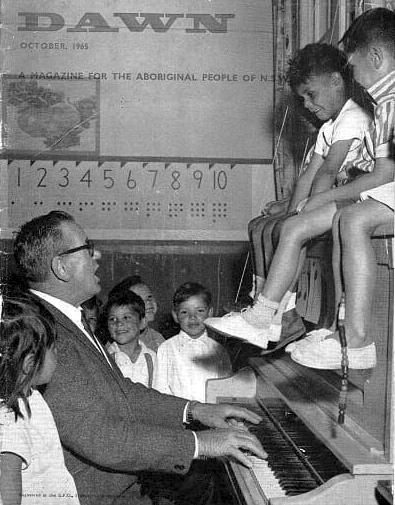
Entertains work hands and station owners with song and music. ( He was a piano & drum player )
Special Constable Joe is rated one or the best bushmen, horsemen, and trackers of the Far West.
His advice is sought on cattle and sheep by men reared on the land.
He knows the country better than those born there, and he is known across the Queensland and South Australian borders as well as in New South Wales.
Yet Joe was born at Forest Gate, London, where his father was a pastry cook— ” the champion pastrycook of England, ” according to Joe.
He came to Australia at the age of 15 and wandered the Australian bush and plains until he joined the mounted police in 1929, at the age of 21.
The Commissioner of Police yesterday announced four other special promotions of constables to the rank of sergeant.
They are R. B. Blake, W. Allen, M. W. Chaseling, and Detective G. Jack.
SYDNEY, Saturday.— Included in police promotions yesterday was the name of Joe Buck, of the mounted police, aged 36, with headquarters at Wilcannia, who was raised from the rank of constable to that of sergeant for meritorious service.
His single police district covers thousands of miles and in the Far West his name is a household word.
Sergeant Joe Buck, of the Mounted Police, who pioneered the first travelling police station in the north-west corner of N.S.W., came to Australia in 1923 because, as a boy in London, he burnt cakes.
He burnt the cakes in his father’s pastrycook bakery not far from where, almost 1000 years earlier, Alfred the Great was scolded for burning cakes.
” Dad gave me such a hiding that I threatened to go to Australia, and Dad was so angry he paid my passage. ” Sergeant Buck said yesterday.
Now 36, he was given special promotion from constable on Friday, for Meritorious service in the largest single police district in the State, and probably the world.
His travelling police station was a truck.
Covering more than 60,000 square miles, his district extended over the opal mines of White Cliffs, shearing sheds of Wilcannia, Milparinka and Tibooburra.
In addition to his police duties he held 23 official appointments, including authority to make wills and perform marriages.
He has married about a dozen couples, but never a white and a black.
After marrying one couple, he found the husband had filled in the form for his condition ( whether single or widowed ) as ” fine, ” and his bride’s as ” pregnant. ”
Sergeant Buck is on a month’s leave in Sydney for the first time since he joined the Mounted Police 14 years ago.
His wife, who helped him with the beginnings of the patrols outback, is with him.
Since last May the travelling police station has been in charge of Constable P. Blake.
Sergeant Buck will be in charge of the territory at Wilcannia, assisted by Constable Jack MacLean.
Government Gazette of the State of New South Wales (Sydney, NSW : 1901 – 2001),
Friday 19 February 1943 (No.23), page 342
(2416) Police Department, Commissioner’s Office,
Sydney, 12th February, 1943.
APPOINTMENT OF SANITARY INSPECTOR UNDER
THE PUBLIC HEALTH ACT, 1902.
IN pursuance of the power vested in him as Local Authority under the Public Health Act, 1902, for the Police District of Mitchell, in the State of New South Wales, Joseph Hubert Buck, Sergeant of Police and Local Authority for the said Police District, hereby appoints Constable 1st Class Daniel John Haigh as Sanitary Inspector for the purpose of carrying into effect the provisions of the Public Health Act at Silverton within the Police District of Mitchell, as on and from the 7th December, 1942.
” Wilcannia residents have been greatly inconvenienced following the recent fire which destroyed the town’s pumping and electricity plant. Citizens, however, are patient, realising that the Council is doing all possible to relieve the position. ”
This was stated today by Sgt. Joe Buck, officer in charge of the Wilcannia Police Station.
Police are preparing a report on the disastrous fire which destroyed the plants, comprising four engines, including two diesel engines. This machinery was housed in the one building.
The damage wa estimated at approximately £5000, but was covered by insurance.
The Council is making arrangements for a local pump to relieve the water position. Negotiations are also being continued for the restoration of the lighting services.
When the fire occurred the town was plunged into darkness and there is now a complete blackout except for the light given by the moon.
Emergency lighting for homes and business houses has been provided by kerosene lamps and candles.
On the day following the fire there was a brisk trade in kerosene lamps, glasses, kerosene, lamps wicks and candles.
Sgt. Buck, referring to conditions generally in the district, said that the recent rains had caused a big improvement. Another inch of rain would assure an excellent winter in the grazing areas.
In recent patrols through Myro Station and Monolon, Sgt Buck found these properties in good heart.
The river at Wilcannia is high, and is still rising. The weir is out of sight.
Sgt. Joe Buck, of the Wilcannia police, left today on his return to his station. He was accompanied by Constable H. Blake, of the Travelling Police Station, who has been granted permission to join the RAAF. He is now awaiting his call up.
Local and district police are to be given a lecture at three sessions on how to rescue crews and passengers from crashed aircraft.
The lecturer is Constable First Class Hunter, of Bathurst, who is expected to arrive here this afternoon.
All district police have been instructed to attend.
Those due in include Constable Madden (Tibooburra), Sgt. Joe Buck, Constables Sawtell and Blake (Wilcannia), Sgt. Carey and Constable Beck (Menindee), and Constable D. Haigh (Silverton).
The Tilpa Red Cross held their Victory Ball in the local hall on Saturday, August 25th. Although the weather had been doubtful causing the organisers some concern. Saturday broke fine and a big crowd was assured.
Visitors from Cobar, Bourke, Wilcannia and Wanaaring were noticed among the revellers and a Victory spirit seemed to be the order of the night. This was the first opportunity that the local people had of celebrating at least officially the victory over Japan and they certainly did it to some purpose.
Sergeant Joe Buck had offered to supply the music and he was as good as his word both he and his drummer Mr. Clark excelling themselves in their efforts. That this combination were appreciated was very much in evidence by the full dance floor all-night.
Mrs. Luffman, Mrs. Suttor and their helpers had the hall decorated in Red, white and blue with Victory Flags around the walls and the dance floor was in excellent condition.
The same ladies were in charge of the sit-down supper in a neighboring building and there were plenty of good things for all. On this occasion it was noticed that there were more young people from neighboring districts and the dancing was kept going with a good swing perhaps in some way due to a bit of competition among the lads. Although the older generation were not doing ” so hot on the dance floor, they seemed to be holding their own elsewhere voted it a good night.
This function was primarily arranged as a Victory celebration yet the money still came in and £84 was the financial result of the night’s effort.
The President and Committee once again extend to their staunch helpers and to all who attended their sincere thanks for their efforts in making this and other Tilpa functions the 100 percent success they have been.
Various Novelties through the night were disposed of as follows -Dinner -Mrs. Howchin; 1lb Tobacco, D. Brookman; Brandy, A. Gascoyne; 1/2lb Tobacco, Mrs. L. Suttor; Sweets, F. Martin.
A PUBLIC farewell was tendered to Sgt. J. Buck and Mrs. Buck at Wilcannia on Saturday night, there being an excellent gathering of residents of both the town and surrounding districts.
Indicative of the esteem in which Sgt. Buck is held in the district was the fact that some of those present had travelled 150 miles. Visitors were present from the White Cliffs district.
Sgt. Buck has been at Wilcannia for about 10 years and taken an active part in the town’s activities, especially on behalf of war and other charities.
The Mayor ( Ald J. Uhl ) presided and spoke of Sgt. Buck‘s organising ability and his work for the betterment of the town. He said he was behind every move made for improved conditions.
Father Jordan spoke of Sgt. and Mrs. Buck‘s activities in connection with church work, and also referred to his organising ability.
Dr. Bonar, on behalf of the Bowling Club, said that the work of Sergt. Buck was mainly responsible for bringing the club to a high plane.
Other speakers also eulogised the work of Sergt. and Mrs. Buck.
On behalf of the citizens, Mayor Uhl handed Sergt. Buck a travelling case and rug and Mrs. Buck a silver mounted tray.
Sergt. Buck responded for himself and wife.
Following the presentation, dancing was continued until about 1 a.m. Sunday.
Sgt. Buck and family will leave Wilcannia for Temora on September 25.
A railway guard who collapsed at Temora railway station on March 1 and died the following morning, allegedly from arsenical poisoning, was happy and singing a short while before he became ill.
This was stated by witnesses at the inquest into the guard’s death, which opened at Temora today before a crowded courtroom.
The guard was Robert Sylvester Condron, aged 46, of 148 Hovell Street, Cootamundra.
Witnesses also stated that Condron was deeply religious. When he collapsed at Temora he called for a priest. One witness said that when he informed Condron’s wife in Cootamundra that he had been taken to Temora Hospital suffering from poisoning, she was shocked and upset.
The witness said that Mrs. Condron had stated that she gave her husband a dose of Bidomak in a small bottle to take with him when he left for Temora.
Evidence was given that a small bottle containing a few dregs of a dark fluid was found with Condron’s belongings at the Temora station after he had collapsed.
The Inquest was adjourned until 10 o’clock tomorrow morning, and a finding is expected tomorrow.
The inquest is being conducted by the Temora Coroner ( Mr. C. Wellingham ). Sgt. G. Lithgow, of Wagga, is appearing to assist the Coroner; Mr. E. J. Callan ( Kinsey and Callan, Cootamundra ) is appearing for the widow ( Mrs. Rita Marie Condron ); Mr. H. E. Hoare is appearing for S. O. Bielby, manufacturer and proprietor of Bidomak, and Mr. W. M. O’Neill, organiser, is appearing for the Australian Railways Union, of which Condron was a member.
The first witness was Robert John O’Shea, leading porter, of the Railway Hotel, Cootamundra, who said that at 5 p.m.. on March 1, 1948, he was in Hovell street, Cootamundra, and saw Condron. Condron was walking on the platform of the Cootamundra railway station carrying his tucker box.
O’Shea said a tucker box in court was similar to the one Condron was carrying.
A few minutes later, O’Shea said he saw Condron in the porters’ room having a cup of tea, Condron said he felt ” good ” and said he was going to Temora. Condron was drinking from a railway refreshment room cup. That was the last he saw of Condron.
John Austin Schofield, railway cleaner, of 72 Parker Street, Cootamundra, said that at 5 p.m. on March 1 he saw Condron on the platform at Cootamundra. Condron said he was working the same train as Schofield to Temora. Condron placed his tucker box in the guard’s van. The tucker box in court was similar to Condron’s, said Schofield.
Stop at Maemar
The train, which consisted of an engine and guard’s van, proceeded to Temora. At a stop at Maemar, Condron left the guard’s van. Condron, said Schofield, appeared to be in good health. He did not complain of illness. The whole of the time they were at Maemar, Condron was in his view, said Schofield. At the home signal box at Temora, Condron still appeared to be in good spirits. As Condron left the train, he said: ” Cheerio, I’ll see you later.”
Schofield said that no other stops were made. He did not see Condron again.
To Mr. Callan, Schofield said he did not think the train stopped at Stockinbingal.
Schofield said he did not know of a tank used to keep poison water for the destruction of weeds at Maemar. He did not know arsenic was used to poison weeds on the railway.
Condron was never out of his sight at Maemar, added Schofield. Geoffrey Joseph Rogers, a shunter, of 134 Temora Street, Cootamundra, was not present in court. The court was informed that he was on his honeymoon.
A statement made by Rogers, in which he told of having seen Condron with his tucker box at Cootamundra railway station on March 1, was read to the court.
Swept Guard’s Van
William Charles Williams, a junior porter, of 38 Victoria Parade, Cootamundra, told of having swept out Condron’s guard’s van. He did not see any utensils in the van. He said the tucker box in court was Condron’s. He saw it in the van. Condron appeared to be in normal health.
” Arsenic Used to Kill Weeds “
Shown a photograph of the carriage section of Condron’s guard’s van, Williams said he did not think it had contained a water bottle when he cleaned the van prior to Condron’s trip to Temora. The guard would not use the compartment.
To Mr. Callan, Williams said that Condron did not have a water bag with him on March 1.
Williams said there could have been some bottles in the guard’s section of the van. He said it was not Condron’s practice to carry a water bag.
Appeared Normal
Merton Henry Hutchinson, acting locomotive driver, of 41 Thompson Street, Cootamundra. said he was the driver of the train on which Condron travelled to Temora as guard. Condron appeared to be in normal health and spirits at Cootamundra. He did not complain of any illness. Condron did not have occasion to use his whistle during the trip to Temora.
Hutchinson said he did not know whether Condron was an impetuous man or a cool, slow moving man.
He ( witness ) knew that arsenic was used by the railways to kill weeds. It was possible that the arsenic mixture would be given to employees for the destruction of weeds, at their home.
William Nicholas Whitford, assistant station-master at Temora, said that on March 1 at 8.30 p.m. he spoke to Condron, who appeared to be in good spirits, and gave him instructions for his return journey. The return journey was due to commence at 10.40 p.m. There was a hut where he would go. It was equipped for guards to have their meals.
” Get a Doctor!”
Whitford said he saw Condron walking towards the hut. Later he again saw Condron taking the numbers of his train.
At 9.45 p.m. Condron came staggering up to the station master’s office. Condron said: ” Get a doctor and ambulance quickly.”
Whitford continued: ” I said ” What’s wrong?” Condron replied, ” I drank something. It must have been poisoned.”
” Condron staggered along the platform and again called out, ” Get a doctor, ambulance and a priest.”
Whitford said he phoned for the ambulance and then saw Condron lying on the platform, crying out. He appeared to be in great pain.
Whitford said a small glass flask in court was the one he saw handed to the doctor who attended Condron at the station.
Whitford said he believed Condron was a very devout Catholic.
Whitford told Mr. Callan that there was hot and cold water in the hut where the guard’s had meals. Condron was an active man.
Complained of Pain
Colin Ray Johns, porter, of Cootamundra Road, Temora, said he saw Condron at the meal hut at 9 p.m. He next saw Condron being placed in the ambulance half an hour later. He did not see anyone in the hut with Condron.
Henry Roy Roberts, relief assistant station-master, of Queen Street, Barmedman, said he was at Temora on March 1. He saw Condron when he arrived from Cootamundra. He was in a cheerful mood and was singing, said Roberts.
At 9.45 p.m. he was in the station-master’s office when Condron asked for a doctor and an ambulance. He followed Condron on to the platform and asked him why he wanted a doctor and ambulance. Condron replied that he had taken something, or had had a drink of something.
Condron was in pain and complained of pain and heat. He appeared very hot, said Roberts. Condron did not say what he had taken.
When asked by the doctor what he had taken, Condron said: ” A dose of Bidomak.”
Roberts said he searched the guard’s van but could find nothing belonging to Condron. In the meal hut he found Condron’s tucker box and gear on the table. The tucker box was open. Condron’s false teeth were cleaned near the tucker box.
” Dark Froth on Bottle “
His billy can was on the table with tea leaves in it, ready for tea to be made, said Roberts. His pannikin contained a bag of sugar. His plate with meat, covered in a bag, was also on the table. The position as he saw it, said Roberts, was normal for a man about to have a meal.
A small flask ( produced in court ) was in Condron’s tucker bag, said witness. It had a screw top and there was a dark froth round the edge of the bottle, as if it had recently been shaken. There were a few dregs of dark fluid in the bottle.
Roberts said it smelt like some patent medicine. He gave the flask to the ambulance driver, to be handed to the doctor. Roberts said he found no containers other than those that would be used by a normal man about to have a meal.
Roberts said he did not think there was a poison water tank at Temora.
Cross-examined by Mr. Callan, Roberts said a tank was not used for mixing poison at Temora. Poison was mixed at Temora at the trolley shed, which was out side the station yards. All mixing instruments were kept under lock.
( Continued on Page 2 )
TEMORA INQUEST ( Continued from Page 1 )
Roberts said that no poison had been used at Temora for 13 months. He had never seen fettlers dip buckets into tanks to get water for mixing poison. Condron did not say anything that would blame anyone else for poisoning him.
Frederick ( Fredick ) George Jordan, ganger, of 31 Warren Street, Cootamundra, said that Condron was the lessee of a railway paddock near his gangers’ shed. The shed was kept locked. The police had taken a sample of weed-killer from the shed.
Jordan told Mr. Callan that he did know some fettlers dipped buckets into the water tanks to get water to dilute poison.
Question of Faith
Norman William Starr, fireman, of 88 Murray Street, Cootamundra, said he had known Condron for several years. He was a hard-working, decent and truthful man. Condron was a devout Catholic. He had once expressed the opinion that religious faith was supreme over all things, and he was known to often quote the scriptures.
Starr told Mr. Callan that Condron was a cautious man.
Cross-examined by Mr. Callan. Starr said that Condron gave him the impression that he ( Condron ) believed that with Christian faith, a man could overcome anything that would kill an ordinary man.
Starr told Sergeant Lithgow that Condron did not give the impression that he world take poison to prove his argument.
At this stage, Whitford was recalled to the box. He said he had made an examination of the yard at the Temora railway station. There were no poison tanks at the yards. None had been removed since March 1 and there had been no poison at the yards for 13 months.
Jack Wilfred James Forrest, guard, of 123 Crowley Street, Temora, said he took over the train in place of Condron. He did not see anything in the van that could have contained water or any liquid.
Frederick Eugene Perrott, a per-way section light duty man, of Barmedman Road, Temora, said he came on duty on the morning of March 2. He did not see anything that could have contained liquid in the meal hut at Temora.
Interview With Wife
Constable Charles Francis Rains, of Cootamundra, said that at 11.15 p.m. on March 1, he went to Condron’s home and told his wife that her husband had taken ill. He told her the symptoms were those of poisoning. When told that her husband had said she had given him a dose of medicine before he left home, Mrs. Condron said: ” Yes, I gave him a dose of Bidomak.”
Constable Rains said he took possession of a bottle of Bidomak given him by Mrs. Condron.
Mrs. Condron said she gave her husband a dose before he left home and put another dose in a small flat bottle like a flask, to take with him.
Constable Rains said that every time he spoke to Condron over the period he had known him, Condron had been in a bad temper. He told Mr. Callan that Condron’s home had been burnt down in 1945. At the time of Condron’s death they were still living in sheds at the rear of the burnt home. Condron was building a new home at the time of his death.
When told of her husband’s condition, Mrs. Condron was shocked and concerned, said witness. She did not ask what kind of poisoning her husband was suffering from.
Post-Mortem Held
Senior Constable Walter Charles Rantlan, of Temora, said that at 11.30 p.m., on March 1 he saw a doctor, who handed him a bottle ( produced in court ).
Sergeant Joseph Hubert Buck, of Temora, said that at 11 a.m. on March 2, he was present at a post-mortem examination on Condron. The doctor had handed him several organs from Condron’s body. On March 4, he handed a number of exhibits in court to the Government Analyst in Sydney.
He produced the analyst’s certificates in relation to the articles. They included the small flask-like bottle, the bottle of Bidomak and the organs from Condron’s body.
A few hours before he committed suicide by taking cyanide poison, 48-years-old Temora taxi driver, Henry Murphy, was almost run down by a locomotive engine in the Temora shunting yards.
Henry Kenneth Adams, railway fireman, told the Temora Coroner ( Mr. C. Wellingham ) that he saw Murphy walking towards an engine he was shunting in the yards.
The Coroner returned a verdict of suicide by poisoning.
“I thought if I hadn’t pulled the engine up I might have hit him. Murphy was only seven yards away when he passed in front of the engine after it had stopped, Adams said.
Adams said it was about 9p.m.
on September 9 when he saw Murphy in the railway yards, where there were numerous wheat stacks. Murphy had hesitated two or three times before passing in front of the train said Adams.
Mr. Wellingham was inquiring into the death of Murphy, who was found dead in his room at the Federal Hotel, Temora, on September 10. ” There is no doubt, in my opinion that the death was made by Murphy to appear as a result of natural causes, making it one of the most involved inquests I have handled,” said Mr. Wellingham. ” Right up until the post mortem, it looked like heart failure and that was also the opinion of the Government Medical Officer ( Dr. Parry ),” said Mr. Wellingham.
Mr. Wellingham directed that ” the painstaking and untiring investigations by Det. Sgt H. J. Cloke, of Wagga, and Sgt. J. H. Buck, of Temora, be brought under the notice of the Commissioner of Police.”
WITNESS CRITICISED
He criticised a Temora woman Mrs. Sopphie Alma Brooks, who gave evidence at the inquest.
“Mrs. Brooks impressed me as a most unfavorable type of witness. I feel she could have told us a lot more than she did, said Mr. Wellingham.
Mrs. Brooks, of Camp Street, Temora, denied that Murphy had given her £470 during the nine months before his death, or that she had bought clothes and charged them up to Murphy’s account in Temora.
She said she was a married woman living apart from her husband, and had known Murphy for the past seven or eight years. About two years ago she went to work at the Trundle Hotel. After four or five months she got a letter from her sister, Mrs. Maquire, of Temora, saying that Murphy wanted to purchase a boarding house at Temora. She and her sister were to rent it at £2/10/0 a week.
DISCUSSION ABOUT BOARDING HOUSE
At a later date she returned to Temora and went into the boarding house with her sister. After a week, she went to bank some money and spoke to Murphy. He told her that be had not let the boarding house to her, but had put her in it as a manageress.
After a discussion with a solicitor at which Murphy was present, she left the boarding house. Before she went into the boarding house. Murphy gave £40 to buy some linen and crockery. After that she did not see much of Murphy, and left Temora.
About 11 months ago she returned to Temora and lived with her sister.
On the night of his death, Murphy had driven her sister and herself down town in the taxi. Murphy mentioned he was going to Trundle the next day, said Mrs. Brooks.
Sgt. Buck ( assisting the coroner ) : Has Murphy given you any money besides that £40.
No.
Sgt. Buck: ” Were you told of an allegation that Murphy had given you £470 over a period of nine months?— He definitely did not give it to me. There is no-truth in it.
Sgt. Buck ( to the coroner ): The allegation was put to her when interviewed by Sgt. Cloke.
WITNESS’S DENIAL
To Mr. Farrell ( for Murphy’s relatives ), Mrs. Brooks denied she had ever charged any goods or clothing to Murphy’s account at any Store in town.
It was not true that she had charged certain frocks to Murphy during the period she was running the boarding house, she said.
The dead man’s widow Ethel Murphy, said she had been living apart from her husband for the past four and a half years.
Murphy had written to her saying that he was not feeling well and had also told her his heart was troubling him, said Mrs. Murphy.
The Temora Government Medical Officer Dr. B. K. Parry ) said that in his opinion Murphy had died from cyanide poisoning.
A resident at the Federal Hotel, Mrs. Margaret Saville Simpson, told the coroner how she found Murphy’s body lying on the bed.
” I was walking past Murphy’s room about 7 a.m. and through the open door I saw Murphy lying on the bed.
” About an hour later I again passed the room and Murphy was lying in the same position, with his right hand across his chest.
” I thought there was something wrong, and after sending for an employee of the hotel, we went in and found him apparently dead,” she said.
SERGEANT’S EVIDENCE
When he arrived at the hotel on the morning of September 10, Murphy was lying on the bed with the bedclothes pulled up around him and was wearing pyjamas, said Sgt. Joseph Hubert Buck, of the Temora police.
The G.M.O. ( Dr. E. K. Parry ) and Constable Pantlon were already in the room.
He saw constable Pantlon, pick up a headache powder wrapper and broken tumbler off the floor. On the dressing table was a pad containing a letter to a man named ” Cecil “, said Sgt. Buck. The letter had apparently been written on the night of Murphy’s death.
On September 13, he and Det-Sergeant Cloke had found a piece of white substance in a cardboard box in the room. It was later Identified as cyanide.
Sgt. Buck said that after a careful examination of the body, he could find no marks of violence.
There was no traces of cyanide in the headache powder wrapper which he had sent to the Government Analyst in Sydney, Det.-Sgt. Cloke told the coroner.
From inquiries he had made, be had ascertained that Murphy was worried before his death.
Although exhaustive inquiries had been made to trace the ” Cecil ” referred to in the letter, the only person he could trace of that name who knew the dead man had died some time ago, said Det.-Sgt. Cloke.
” From inquiries I have made, I am satisfied that Murphy took his own life. ” said Det-Sgt. Cloke. Cyanide was used extensively in the district for the destruction of mice in wheat stacks, he said.
Tumut and Adelong Times (NSW : 1864 – 1867; 1899 – 1950),
Tuesday 21 December 1948, page 2
PERSONAL
Says the ” Temora Independent “:
” Temora will lose a good policeman and a fine citizen by the transfer of Sergt. J. H. Buck to Bathurst.
He expects to be taking his departure early in the New Year.
On Friday morning Sergt. Buck‘s promotion to Sergeant Second-Class was announced and word of his transfer to Bathurst came through on Friday evening.
He becomes one of the youngest second-class sergeants in the service, which he joined in March, 1929, and has received many well-deserved congratulations. ”
As Constable “Joe” Buck was stationed in Tumut for some years, his promotion is noted with interest.
Sergeant Joe Buck, of Bathurst, I formerly of Broken Hill and Wilcannia, has passed the examination for promotion to sergeant first class.
Constable W. Sowerby, formerly clerk in the inspector’s office at the Central Police Station, has passed the examination for promotion to sergeant third class.
CASINO, Monday.— Mr. Joe Buck has become the first life member of Casino Amateur Swimming Club.
This honour was conferred on Mr. Buck at tonight’s annual meeting, attended by 85 members.
Mr. Buck has been re-elected president, even though his transfer to officer-in-charge of police at Darlinghurst is pending.
He is the inaugural secretary of the swimming club, formed two years ago, and was elected president last year.
All the executive were returned unopposed. They are the secretary, Mr. W. H. Smith; treasurer, Mr. A. F. McDonald; patrons, Ald. R. W. Manyweathers, Sir Earle Page, M.H.R., Messrs. I. L. Robinson, M.L.A., A. E. Robinson, D. K. J. Kissane, and G. F. Thompson: vice-presidents, Messrs. J. Galbraith, E. E. Gray; handicapper. Mr. N. Balzer; race secretary, Mr. W. Cox; women’s captain, Miss H. Moller.
Mr. A. McGearey won a ballot to become club captain of the men, and the committee ( elected on a ballot ) comprises Messrs. D. Gooley, K. Gooley, N. Imeson, R. Imeson, J. McElligott, G. Naughton and C. O’Connor.
Joe BUCK received the Queen’s Medal for Distinguished and Meritorious Service from His Excellency, the Governor of New South Wales, Sir Eric Woodward. November, 1961.
Government Gazette of the State of New South Wales (Sydney, NSW : 1901 – 2001),
Friday 22 June 1962 (No.59), page 1799
ABORIGINES PROTECTION ACT, 1909 – 1943
Appointment
THE Governor-in-Council has approved of the appointment of Superintendent 2nd Class Joseph Hubert Buck as a member of the Aborigines Welfare Board, vice Frederick Stanley Windsor, Deputy Commissioner of Police.
THE Governor-in-Council has approved of the appointment of Superintendent Joseph Hubert Buck as a member of the Bush Fire Committee, vice Mr. Frederick Stanley Windsor, resigned.
The marriage of Miss Gaenor Veronica DAVIS and Mr. Joseph Hubert BUCK will be celebrated at St Ignatius’ Church, Bourke, with Nuptial Mass, on Saturday, 6th June ( 1964 ), at 5.45 p.m.
A reception will follow at the Memorial Hall Supper Room.
It would ‘appear’, from the wording of the below article, that the name of Joseph Hubert BUCK was used by, both, father and son.
It is unknown ( by me – Cal ) as to whether Joseph Hubert BUCK ( Jnr ) was also a member of NSWPF.
On the grave stone of Eunice & Joseph ( Snr ), the childrens’ names are recorded as Joe, Terry, Peter ( living 2021 ), Denis, Margaret & Angela.
The Mentioned ‘ Joe ‘ is, no doubt Joseph Hubert BUCK Jnr.
Western Herald (Bourke, NSW : 1887 – 1970),
Friday 12 June 1964, page 1
MARRIAGE WITH NUPTIAL MASS
MR. AND MRS. JOSEPH HUBERT BUCK .
Photo by ” Speedex ”
Nuptial Mass was celebrated by Father F. Dunne at St. Ingatius’ Church, Bourke, on 6th June, after the wedding of Gaenor Veronica younger daughter of Mr. and Mrs. W. W. Davis, of ” Bendemeer , ” Bourke, to Joseph Hubert, eldest son of Superintendent and Mrs. Buck of Bourke Street, Darlinghurst.
Anas, sister of the bride, acted as bridesmaid and John Dwyer was best man.
” Ave Maria ” was rendered very sweetly by Miss Helen Ellicott and a guard-of-honour was formed by the Children of Mary.
The bride’s dress was of Peau De Soie with French beading and a long train. She carried a bouquet of white hyacinths and white gladioli roses with ivy trailers. Her veil was held in place by a Peau de soie headpiece.
The bridesmaid wore blue Thai silk and her bouquet was of white gladioli roses with ivy trails.
The bride’s mother wore a gold brocade frock and jacket with mink collar and brown accessories.
The bridegroom’s mother chose a blue embroided wool suit with beige accessories.
Floral decorations in the Church were arranged by the bride and Mrs. Jim O’Shannessy.
Immediately following the Church Service over 300 guests were welcomed at the Reception in the War Memorial Hall by Mr. and Mrs. W. W. Davis, Supt. and Mrs. Buck and the Bridal Party.
After all had partaken of the lavish banquet Mr. L. D. Davis; uncle of the bride, who acted as Chairman, opened the toast list by honouring ” Her ‘Majesty the Queen. ”
Other toasts honoured were: ” The Bride and Bridegroom,” proposed by Mr. Bob Ridge and replied to by the Bridegroom who then gave a toast to ” The Bridesmaid,” which was replied to by the best man; ” The Bride’s Parents ” was proposed by Mr. D. Swan and responded to by Mr. W. W. Davis; ” Parents of the Bridegroom” was in the hands of Mr. B. Doohan, to which Supt. Buck replied; ” The Press ” was given by Mr. L. Pearson, and responded to by Mr. L. Carmichael.
The final toast honouring ” The Chairman,” was proposed by Mr. R. Molony. In his response Mr. L. D. Davis thanked Mr. Nick Peters for his wonderful catering and Miss Colleen Moxey for her attractive decorating. The speaker said he was deputising for his brother, Kerry, who was ill in Sydney and had expressed his sorrow at not being present to see Gae and Joe married.
A large number of telegrams from relatives and friends unable to be present were read by the best man.
The three-tier wedding cake, iced in all white, held a prominent position on the bridal party table. During the proceedings it was cut by the bride and groom with due ceremony and handed around to guests by the bridesmaid.
Following the formal proceedings dancing began with the Bridal Waltz, with music supplied by the bridegroom’s father on the piano. The many admirers of the voice of Mr. John Dwyer were pleased to hear him sing.
The lovely array of gifts displayed at the reception hall would gladden the heart of any bride. We feel sure they will be a constant reminder to the happy couple of their wedding day.
For her going away outfit the bride wore a deep blue wool dress and jacket, with white accessories.
After the reception the happy couple left for a tour of the New South Wales Coast.
We join with the many friends of the newlyweds in wishing them all the best in their future life. They will reside in Wee Waa.
Six residents from Collector will take part on February 1, in the re-enactment of the shooting of Constable Nelson at Collector.
They will be supported by four members of the Wild Colonial Days Society of Sydney. The society’s president, Mr. Edgar Penzig, will take the part of Constable Nelson.
The Collector residents are John Sheridan and Lindsay Poidevin who will play teamsters; Bernard Reardon, a prospector; John McInerney, the hotel licensee; Maurice Granger, farmhand; and Paul McInerney as Harry Nelson, who held the bushrangers’ horses.
Assistant Commissioner of Police J. H. Buck will be in the official party attending the re-enactment.
Commissioner Buck will be accompanied by his wife.
He is well known in the district. He relieved as superintendent in Goulburn several times a few years ago.
Government Gazette of the State of New South Wales (Sydney, NSW : 1901 – 2001),
Friday 5 May 1967 (No.46), page 1435
Chief Secretary’s Department, Sydney, 5th May, 1967.
ABORIGINES PROTECTION ACT, 1909, AS AMENDED
RESIGNATION
THE Governor-in-Council has approved of the acceptance of the resignation tendered by Mr Joseph Hubert Buck of his position as a member of the Aborigines Welfare Board.
Government Gazette of the State of New South Wales (Sydney, NSW : 1901 – 2001),
Friday 5 May 1967 (No.46), page 1435
Chief Secretary’s Department, Sydney. 5th May, 1967.
BUSH FIRES ACT, 1949, AS AMENDED
Resignations
THE Governor-in-Council has approved of the acceptance of the resignations tendered by Messrs Joseph Hubert Buck and Albert Mainerd of their positions as members of the Bush Fire Committee.
Joe Buck Series. Joe and his time at White Cliffs.
Joe Buck Series. Joe and his time at White Cliffs.
Joe Buck Series. Joe and his time at White Cliffs.
Joe Buck Series. This photo is described “Sunburnt”. Looks like Joe got a bit too much sun while in Tibooburra.
Joe Buck Series. This photo is described as being the Tibooburra Police Station early 1930’s.
Joe Buck Series. In other publications we have read, Joe was handy with music and could hold a tune. He was very well respected in every community he worked in… and the kids loved him too.
Joe Buck Series. In other publications we have read, Joe was handy with music and could hold a tune. He was very well respected in every community he worked in… and the kids loved him too.
Joe Buck Series. In other publications we have read, Joe was handy with music and could hold a tune. He was very well respected in every community he worked in… and the kids loved him too.
There are numerous other newspaper articles that mention Constable BUCK and / or the Travelling Police Station with Trove.
Nothing further, than what is recorded above, is known about this person at the time of publication and further information and photos would be appreciated.
Cal
22 Sept. 2021
Kevin William SMITH
| 17/10/2022
Kevin William SMITH
AKA Smithy
Late of ?
Father of Samuel SMITH, NSWPF # 50666
Father of William SMITH, NSWPF # 53562
NSW Police Training Centre Redfern – Class # 180B
New South Wales Police Force
Regd. # 20135
Service: From11 January 1982to7 December 2020 = 38 years, 10 months, 26 days Service
Rank: Commenced Training at Redfern Police Academy on Monday 11 January 1982 ( aged 18 years, 9 months, 19 days )
Probationary Constable- appointed 2 April 1982 ( aged 19 years, 10 days )
( Due to current Govt. restrictions on ‘Gatherings’ due to Corona19 Virus Pandemic, some families may wish to have a Memorial Service / Wake with friends and family at a later date )
Funeral Parlour: as above
Buried at: Cremated
A plaque will be placed at the Crematorium Gardens and also at Seal Rocks, NSW, in due course.
Memorial / Plaque / Monument located at: A plaque will be placed at the Crematorium Gardens and also at Seal Rocks, NSW, in due course.
Dedication date of Memorial / Plaque / Monument: Nil – at this time ( May 2021 )
KEVIN is NOT mentioned on the Police Wall of Remembrance *NEED MORE INFO as of 2022
KEVIN MIGHT BE ENTITLED TO BE mentioned on the Sydney Police Centre Memorial Wall, Surry Hills
Family currently awaiting results of request for the Police Centre Memorial Wall, Surry Hills ( June 2021 )
KEVIN IS mentioned on the Sydney Police Centre Memorial Wall, Surry Hills as of 25 October 2022
FURTHER INFORMATION IS NEEDED ABOUT THIS PERSON, THEIR LIFE, THEIR CAREER AND THEIR DEATH.
This afternoon, in a quiet and deeply-felt ceremony at the Sydney Police Centre, another thirteen names were added, and the memories of another thirteen dedicated NSW Police Force employees were honoured, at the NSW Police Force Service Memorial: